
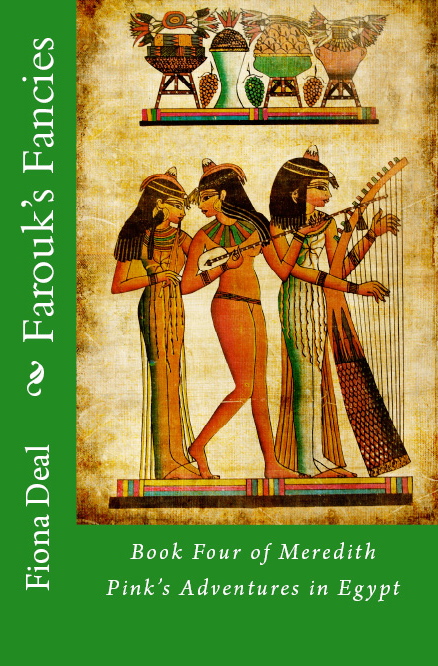
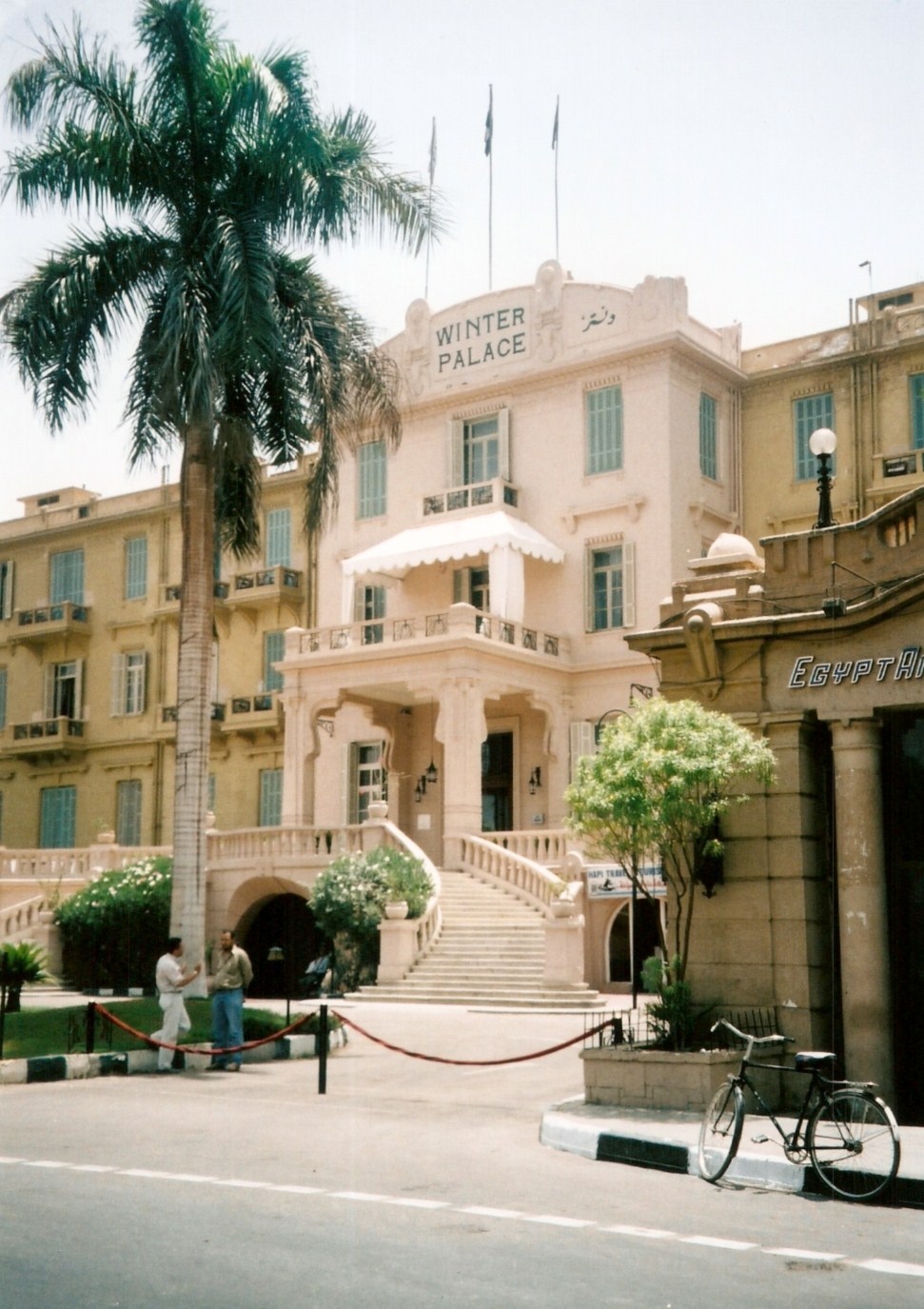
My latest book following Meredith Pink’s Adventures in Egypt is called Farouk’s Fancies. On a recent trip to Luxor I visited the wonderful old colonial hotel, The Winter Palace.
This was once a winter retreat for Egypt’s last reigning monarch, King Farouk. He was last in line of the Turkish Mohammed Ali Dynasty that had ruled Egypt for ten generations. It sparked my interest in finding out a bit more about the king who was exiled to Europe after an uprising by the people that toppled him from power (sound familiar?)
And what a fascinating and larger(literally) than life character he was!

English: Photograph of Farouk I (1920-1965), King of Egypt (1936-1952). (Photo credit: Wikipedia)
He came to the throne as a teenager; young, handsome and blue-eyed. But the honeymoon period wasn’t to last. Known early in his reign for his excessive partying and gambling, Farouk was once described as “a stomach with a head”. He grew to over 20 stone. It’s rumoured he drank 30 bottles of fizzy drink every day and had caviar for breakfast; apparently eating it straight from the can.

King Farouk of Egypt (1948) (Photo credit: Wikipedia)
It was said if there were seven deadly sins, Farouk would find an eighth. He was a glutton , womaniser, gambler and, perhaps bizarrely for someone with infinite wealth, a kleptomaniac. He famously stole a pocket watch from Winston Churchill. He later claimed to have simply found it lying around, but neglected to mention that he’d “found” it in Churchill’s pocket. He also stole a ceremonial sword from the coffin of the Shah of Persia, while it was in Cairo. It put a strain on relations between Egypt and Persia for years.
There’s another story that after having nightmares about lions attacking him, Farouk decided to take a trip to the Cairo Zoo. Once there, he shot the lions in their cages. Hardly a normal reaction to suffering a bad dream!
Finally, when Hitler’s army was preparing to invade Egypt, Farouk sent Hitler a telegram apparently welcoming the offensive. He resented the British forces occupying his country. I can only assume he must have thought the Nazis were somehow preferable.
Farouk frittered away his popularity. In 1952, he was overthrown in a move supported by both the British and American governments and soon afterwards the hugely popular President Nasser took up the reigns of leadership in Egypt. Farouk was sent into exile in Europe. When his palaces were raided, he was found to have huge collections of treasures including rare coins, stamps, and a massive collection of pornography.
While my book is set in the present day, so Farouk does not appear as a character, the mythology that’s sprung up about his personality and excessive lifestyle provided a great backdrop for my story.
 Fiona Deal