The curse of Tutankhamun

George Herbert, 5th Earl of Carnarvon, at Howa...

George Herbert, 5th Earl of Carnarvon, at Howard Carter’s home on the Theban west bank, according to Griffith Institute, Oxford (Photo credit: Wikipedia)

The curse of Tutankhamun was born ninety years ago today, with the untimely death of his patron and benefactor Lord Carnarvon, allegedly of an infected mosquito bite.

The story of the curse started circulating immediately.  Despite persistent ill-health following a near fatal car accident as a younger man, Lord Carnarvon was only in his fifties when he died on 5 April 1923.

Howard Carter famously discovered Tutankhamun’s tomb on 4/5 November 1922, and Lord Carnarvon was there to enter it with him for the first time three weeks later.

The story of the pharaoh’s curse that ‘death shall come on swift wings to those who enter this place’ took hold immediately.

Here’s a link to an article explaining a bit more.  Mummy’s curse.

As a matter of chance, today I visited Howard Carter’s house on the West Bank of the Nile, at the entrance to the Valley of the Kings.  It’s a hugely atmospheric place, now open as a museum.

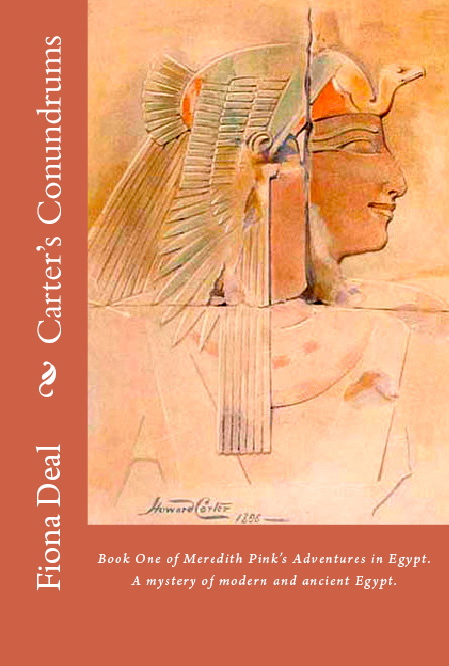
Book 1 of Meredith Pink's Adventures in Egypt

Book 1 of Meredith Pink’s Adventures in Egypt

It was very evocative for me to be back in Howard Carter’s house, as this is the setting for the opening scene of my first book, Carter’s Conundrums.  Merry discovers she’s been inadvertently trapped there for the night.  It’s the start of a thrilling adventure.  Trying to escape, she smashes the picture frame of a watercolour painting  by Carter … only to find a secret message and some mysterious hieroglyphics inside.  It sets her off on a quest to solve the puzzle she’s been presented.

Here’s a photograph I took this morning showing Howard Carter’s study – this is the window Merry attempts to escape through, and a replacement for the lamp she smashed !

IMG_4418

Book 2 of Meredith Pink's adventures in Egypt

Book 2 of Meredith Pink’s adventures in Egypt

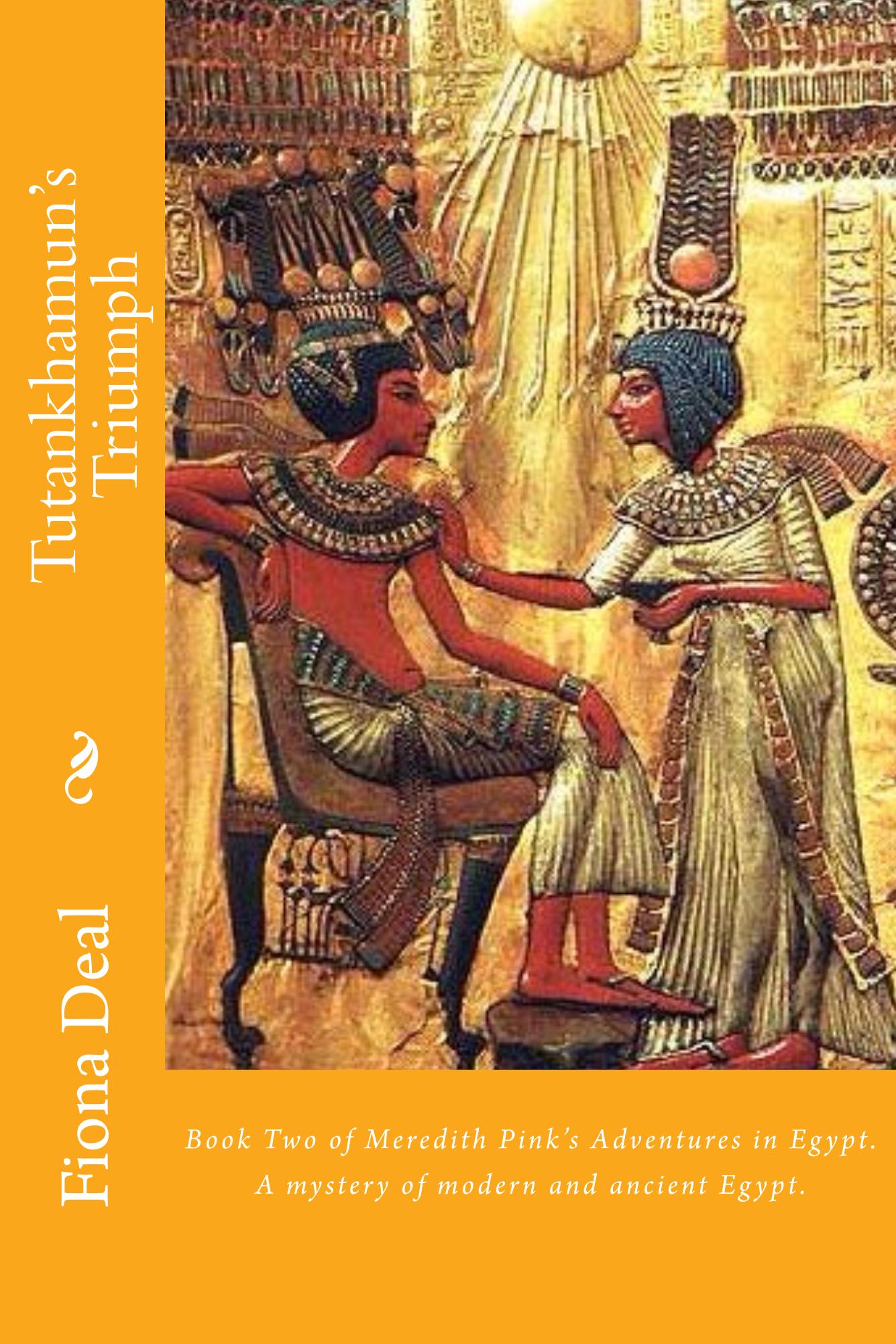
I also made use of the story of the pharaoh’s curse in my second book, Tutankhamun’s Triumph.

Everywhere you look in this ancient land of the Pharaohs there’s something to inspire the imagination.

Tonight I will raise a glass to toast the memory of Lord Carnarvon, and the ‘wonderful things’ he and Howard Carter discovered for the modern world.

Fiona Deal
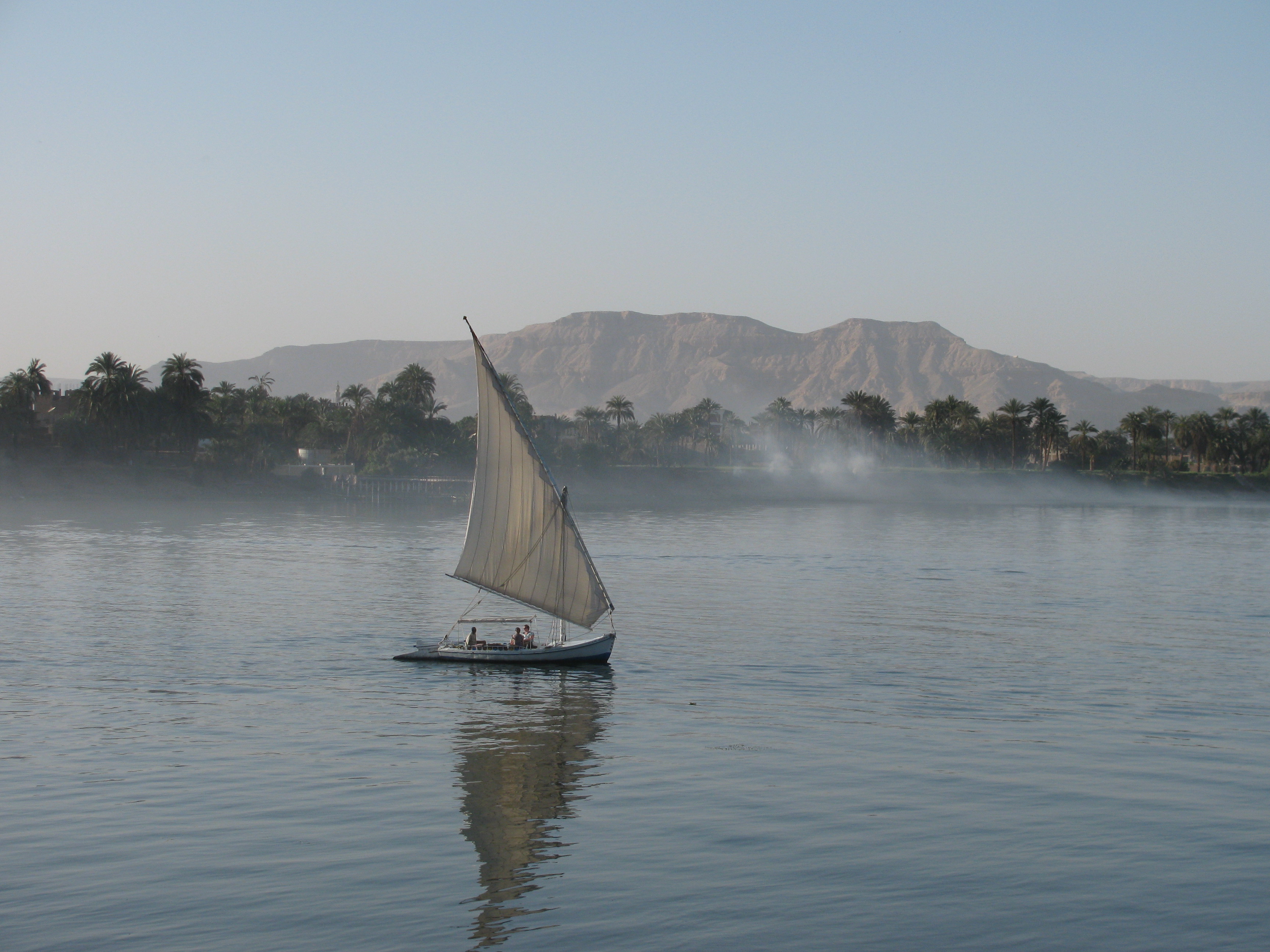
Cruising the Nile


IMG_3094
The palm trees nod politely to each other along the riverbank.  Black and white kingfishers dart in and out of the shallows, playing a game of hide and seek among the reeds that line the waters edge.  The great river Nile surges underneath the boat, making its journey from Ethiopia to spill into the Mediterranean, thousands of miles away.  This is Egypt.

To cruise the Nile is to sail through a timeless landscape.  Ok, so the electricity pylons compete with the ancient stone-built pylons (or gateways) of the ancient temples.  We’re not so much sailing under the gigantic sails of a Victorian dahabeeyah as being propelled through the water by diesel, no doubt leaving choking fumes in our wake.

But this is still Egypt.  Exotic, timeless, romantic and just slightly scary.  The sun beats from a hard, hot sky, demanding submission in much the same way I imagine the ancient Pharaohs once did.  The locals hassle incessantly, citing the delights of caleche rides (horse and carriage) and trips out on a felucca at sunset.  Baksheesh is a way of life.  The price they suggest is never actually what they mean, or what you’ll end up paying if you’re unwary.  But the people are friendly, welcoming and eager to share the delights of their country and way of life.

I don’t think there’s anywhere quite like it on the planet.  Ancient and modern juxtaposed in a way that makes you wonder which is more deserving of its position.

This is the setting for my series of books following Meredith Pink’s adventures in Egypt.  Through her, I get to spend all my leisure time in the fabled land of the Pharaohs.  There’s nowhere I’d rather be, whether it’s for real or the opportunity to travel along the banks of the Nile in my imagination.

Here’s a short video I made showing typical river scenes from the deck of a Nile cruiser.  I hope it brings a little slice of Egypt to wherever you are right now.

Fiona

Prince Charming finds Carter’s Conundrums

Book 1 of Meredith Pink's Adventures in Egypt

Book 1 of Meredith Pink’s Adventures in Egypt

Here’s a link to an interview Jessica Elliott, living in Kansas USA, asked me to do.  She read Carter’s Conundrums and found me on Facebook.  She’s also a writer.  Her book about how to become Prince Charming, called Charming Academy, sounds like great fun.  I’ve downloaded it to read over Easter.

Here’s the interview

Egypt – a timeline – ancient to modern

Egypt’s history spans an amount of time so immense it’s head-spinning.  I remember as a sixteen year old, on my first visit to Cairo, looking up at the Great Pyramid of Giza and finding it impossible to get my brain to compute a passage of something like four-and-a-half thousand years.

Frankly, I have the same problem today.  On a Nile cruise, it’s typical to see monuments spanning at least fifteen centuries, from the ‘old timers’ like Karnak through to the relative ‘newbies’ such as Philae.

Trying to sort them into some sort of chronology is no easy task.  As an author (of the series following Meredith Pink’ Adventures in Egypt) it’s important I’m accurate about the age of the ancient monuments relative to each other.  So, primarily to keep it all straight in my own head, but also to help travellers to the land of the pharaohs, and those with an interest in Egypt but – like me – no scholarly background … I’ve had a go at producing a timeline.  Here’s the result …


On location – the Nile

There are many wonderful places to visit along the Nile.  The standard Nile cruise itineraries take visitors to the sites on both banks of the Nile at Luxor, then head south towards Aswan.

I’ve put together a short video showing my favourites on the journey between Luxor and Aswan: Efdu, Kom Ombo, Philae – all of which date from the Greaco-Roman period.  Also the Unfinished Obelisk still lying in its granite quarry in Aswan where Queen-Pharaoh Hatshepsut’s workmen were forced to leave it when a huge crack appeared in the rock.  If it had been finished it would have stood one third taller than any other obelisk in Egypt.  And, of course, the magnificent Abu Simbel on Lake Nasser.  This is a feat of both ancient and modern engineering.  UNESCO re-sited it in the 1960s to rescue it from the rising waters of Lake Nasser.  Most cruises give the option to either drive or fly down to see it – and it’s not to be missed – despite the early start!

Merry and Adam go on a Nile cruise in the third book in my series following Meredith Pink’s Adventures in Egypt – Hatshepsut’s Hideaway.  They visit Edfu and Kom Ombo – with incidents in both of course!  It wouldn’t be a story otherwise!

If you’re interested in seeing a similar video on the sites of Luxor, check out my link: On Location in Luxor.

Fiona Deal

On location in Luxor

Luxor in Egypt provides the setting for my books following Meredith Pink’s Adventures in Egypt.  I’ve stayed many times in Luxor.  It’s a kind of open air museum.  All the key sites are within easy travelling distance, on either the East Bank (where most of the modern hotels are located) or the West Bank of the Nile.

Some of those who’ve been kind enough to write reviews of my books – and have obviously travelled to Egypt themselves – have said the books bring back great memories for them.  Egypt really is a place once visited, never forgotten.

For those of you who may not have been lucky enough (yet ?!) to travel to the magical land of the pharaohs, here’s a short video I put together.  It’s my take on some of the most impressive historical sites Luxor has to offer.

I haven’t yet used all these archaeological sites as settings for scenes in my books.  And there are a few locations I haven’t included in this video.  The Ramesseum for one, and the Temple of Seti I – both located on the West Bank.

That’s the whole thing about Egypt … there’s so much to see … so much history.  It’s hard to know what to include and what to leave for another time …

And it keeps drawing me back.

Fiona Deal

Hatshepsut’s thwarted dream

So, was Hatshepsut’s great dream to have her burial chamber directly underneath her mortuary temple at Djeser Djeseru i.e. her wonderful temple, now known as Deir el Bahri?

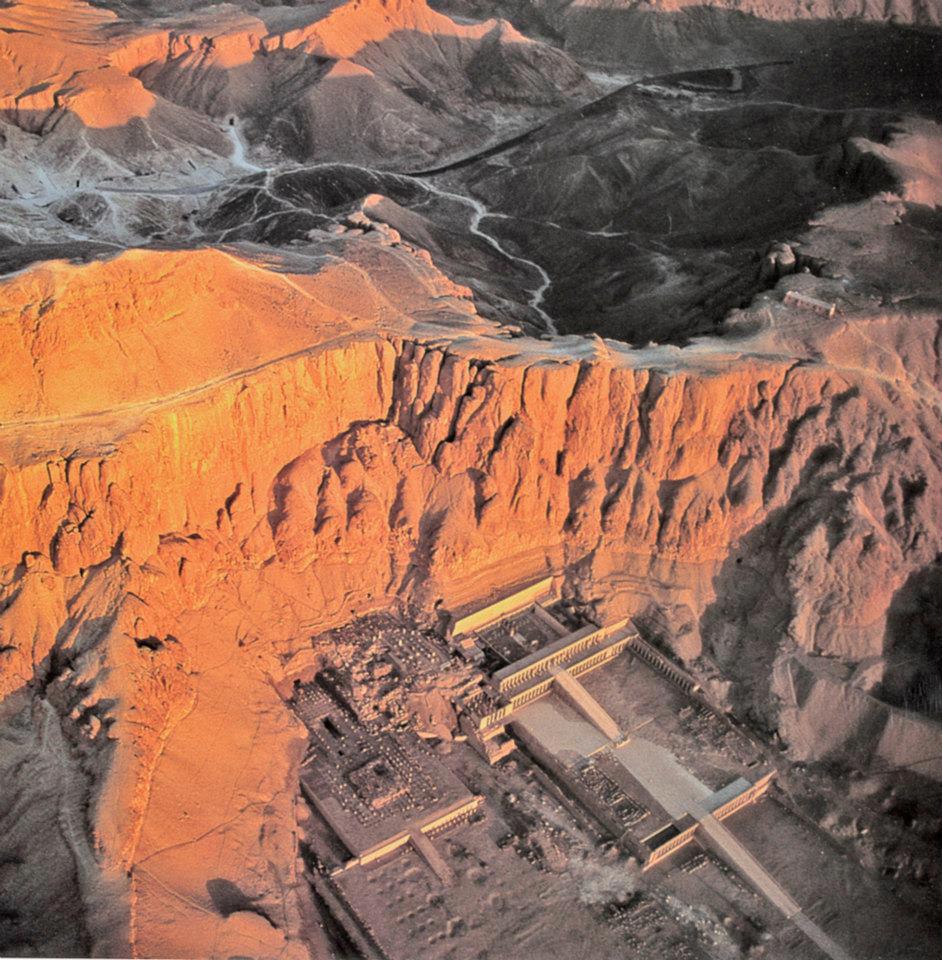
527990_4920798412461_1938065574_nThis aerial shot shows Hatshepsut’s temple nestled against the cliff-face, with the Valley of the Kings directly behind it on the other side of the mountain.  You an also see the ancient pathways across the clifftop.

Her tomb, KV20, has its entrance at the end of a branch leading from the main Valley stem.  Had it been dug in a straight line, many believe the burial chamber would have been excavated directly beneath the temple.  But sadly the quality of the bedrock was poor.  It seems the ancient tomb-builders were forced to spiral away from their original plan.

Hatshepsut’s magnificent temple features prominently in all three of my books following Meredith Pink’s Adventures in Egypt.  It’s where Merry and Adam first strike up a conversation, and she enlists his help to solve the mysterious puzzle she’s stumbled across in Howard Carter’s house.

Howard Carter’s association with Queen-Pharaoh Hatshepsut was a close one.  As a young man working for the Egypt Exploration Society, Carter spent five years as an artist recording the wall reliefs in watercolour paintings.  Later, as an archaeologist, he was responsible for excavating her tomb, KV20.  This was an unenviable task: so hot his wax candles melted and with an atmosphere thick and redolent with centuries of bat droppings.  All this provides great material for a writer, and I made good use of it in Carter’s Conundrums.

Whether or not Hatshepsut’s temple stands as one of her great triumphs or a thwarted dream, I rate it as possibly the most beautiful of all the ancient Egyptian temples.

DSCN5281

The most romantic sunsets on earth …

The Egyptian sunsets are spectacular … possibly as a result of all the sand in the atmosphere.  The heroine in my books, Merry Pink, has a fair bit to say about the mystery and magic of an Egyptian evening.  And she has just cause …

Here’s a short film I put together of views of the Nile at twilight and sunset – all taken from the wonderful Jolie Ville hotel, which features as the setting for Meredith Pink’s Adventures in Egypt.

The felucca’s glide by, alongside the occasional cruise boat – and fishermen go about their business in the same way they’ve done for centuries.  There’s a timelessness about it that never fails to cast its spell.

Like Merry, I’ve spent many happy hours with a drink in hand enjoying the spectacle of the most romantic sunset on earth.  Egypt has its troubles, to be sure.  But there’s nowhere I’d rather be as dusk falls on a hot, tropical night …

A ride on Ramses the camel…

Ramses the camel features in the first two of my novels following Meredith Pink’s Adventures in Egypt.  No … Ramses (the camel) is not a figment of my imagination.  Here I am, enjoying a ride on him with his keeper Mohammed, in March 2011, around the beautiful grounds of the Jolie Ville hotel in Luxor.

As you can see, the waters of the Nile lap against the hotel gardens.  It’s one of the most beautiful places on earth.

The Jolie Ville is the setting for the whole trilogy of Meredith Pink’s adventures in Egypt, starting with Carter’s Conundrums.

Scene 1: Howard Carter’s House

IMG_2823

My first book, Carter’s Conundrums opens with Meredith (Merry) Pink discovering she’s been inadvertently locked in the Howard Carter Museum in Luxor.  Merry’s there in early May 2012.  The museum opened in late 2009, and I visited in March 2011.  It was once Howard Carter’s home, where he lived during the thrilling years leading up to, and after, his discovery of Tutankhamun’s tomb in the Valley of the Kings.  Here I am standing outside.

Here’s a link to the website of Zahi Hawass, former Minister of Antiquities and Director of Cairo Museum (he resigned during Egypt’s revolution).  He talks about his decision to restore Howard Carter’s former home to its original glory as a museum, after years of neglect.  Hawass also mentions his plans to build replica tombs near to Valley of the Kings.  His goal was to close the genuine tombs of Nefertari and Tutankhamun, among others, and permit visitors to visit ‘replica’ tombs, perfect in every detail … except authenticity.  It sounds a bit Disney to me, but I admire his determination to preserve the ‘real’ tombs for posterity.

Another great source of information about Howard Carter’s house is TripAdvisor.  Visitors post their opinions, and some great photos of the house inside and out.

IMG_2819

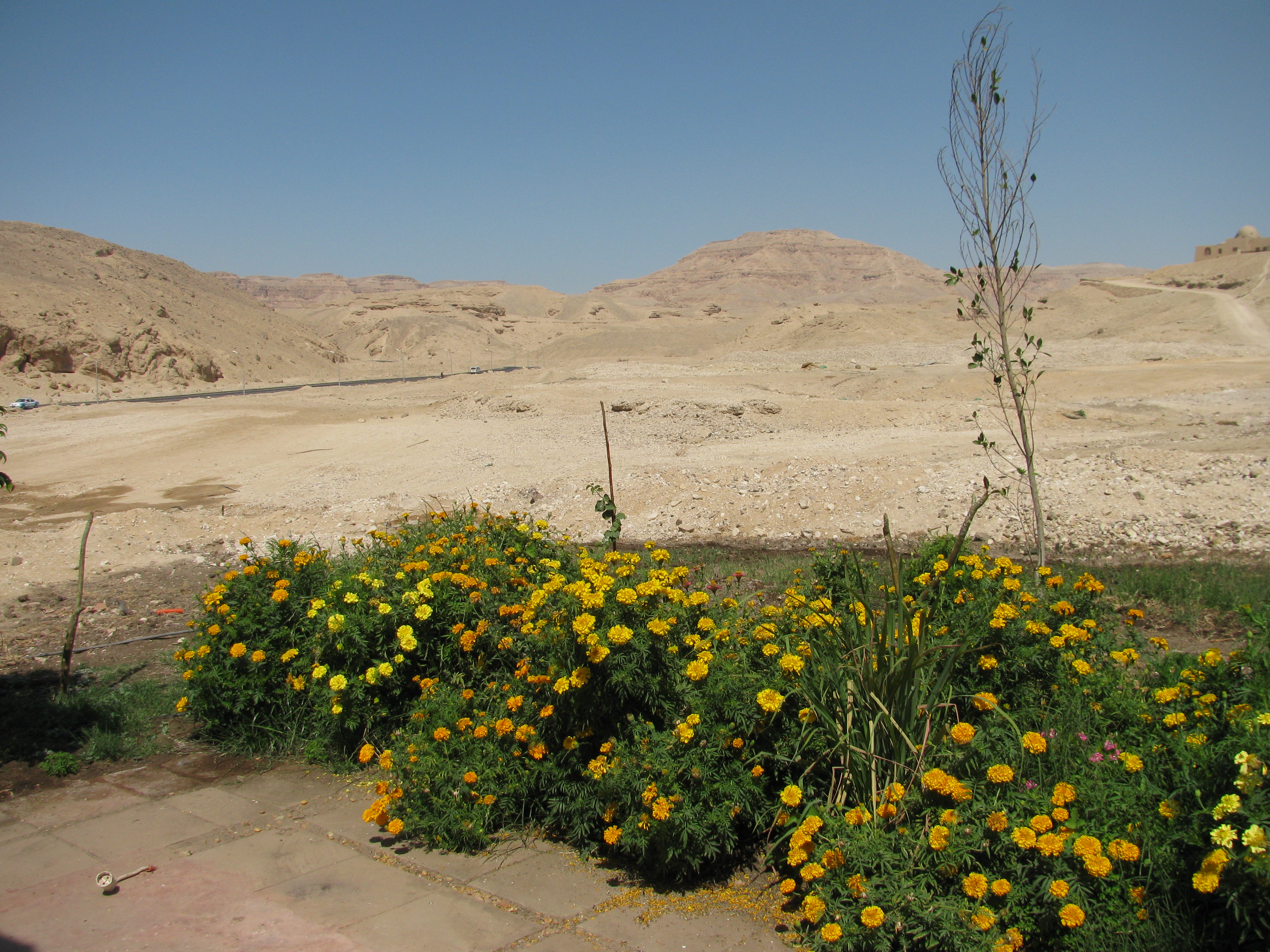
View from Howard Carter’s ‘garden’

IMG_2820

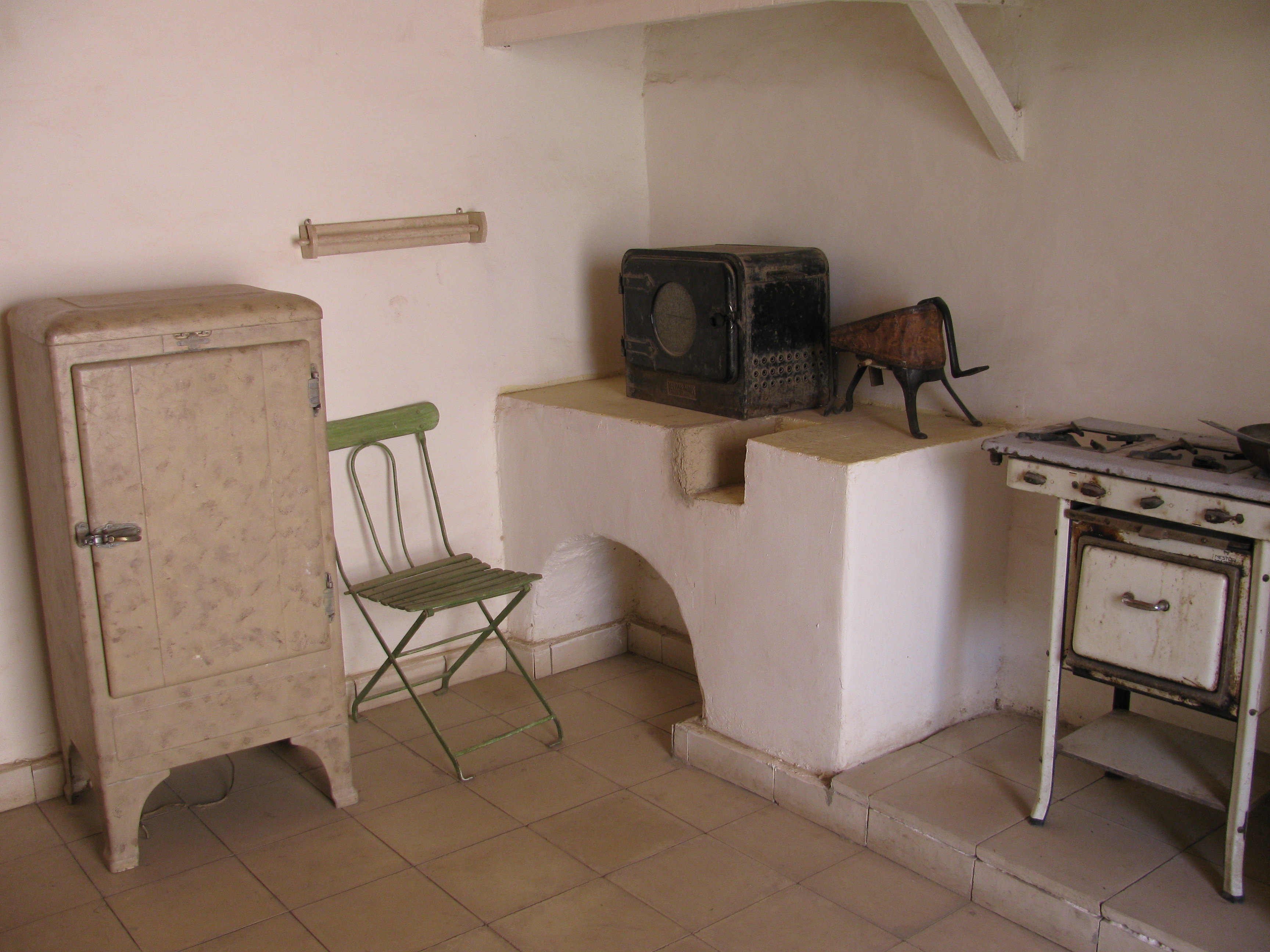
Kitchen in Howard Carter’s house

I visited on a family holiday.  My nearest and dearest are pretty tolerant of my obsession with all things Egyptological, and waited for me in the rest-house outside, with its fabulous views towards the Valley.  So, for a few precious moments I had the inside of Howard Carter’s old home completely to myself.  Even the ubiquitous guide left me alone. The atmosphere was thick with nostalgia.  I felt I might turn at any moment and find Howard Carter himself emerging from a doorway.  Strange, the way time can feel such a distorted concept.  Anyway … I think that’s where the idea for Carter’s Conundrums first took hold, though I didn’t put pen to paper for another year.

It seemed to me to be a place whispering secrets … if only I could just tune into the right wavelength.  So I let my imagination take over, and book 1 of Meredith Pink’s adventures in Egypt is the result.

Howard Carter’s house isn’t included on the standard tour itineraries.  If you’re lucky enough to be in Luxor any time soon, don’t miss it.  It’s a rare treasure.

A good time to visit Egypt as a tourist?

In view of the tragedy that unfolded in Paris yesterday, I thought it was a good time to brush the dust of this, one of my first posts about Egypt.  The Foreign Office is advising visitors to Paris to exercise extra care.  It just goes to show you can be anywhere in the world when terrorism or tragedy strikes.  Just look at the Boston marathon a couple of years back, the Mumbai and London bombings, etc.

Egypt is a nation that has experienced perhaps more than its fair share of upheaval – much of it political in recent years.  The Foreign Office still advises against all but essential travel to certain parts of the country (not including the prime tourist locations around the Red Sea and in Cairo and Luxor.  So, should tourists continue to stay away?

As someone who has visited Egypt almost every year for more than a decade, I would say GO.  The sites are quiet, the people welcoming and the weather fabulous !  Of course, be careful … but sadly that seems to be the case everywhere in the world.  Here in the UK the terror threat remains ‘severe’.  So… Egypt …

I first visited Egypt in 1983, a scant two years after the assassination of President Anwar Sadat.  We were there in October, staying near the Pyramids in the Jolie Ville hotel.  Shortly after we left it was razed to the ground in demonstrations.  I have to say I don’t remember why!  If anyone can enlighten me I’d be grateful.

img236

Here I am – back in Egypt – this time in July 1996.  This picture was taken in the Valley of the Kings.  It was the year before the awful massacre of tourists at Hatshepsut’s temple.  I remember how shocked and horrified I was when I saw it on the News and thought how recently I’d been there.

scan0053

I was back in 2002, just months after 9/11. Tourists were staying away.  Holiday prices were cheap.  The locals were as friendly and welcoming as ever – despite the usual call for baksheesh !

scan0064

The next visit was 2004.  A fantastic trip.  One week on the Nile, cruising between Luxor and Aswan.  Then a week in Luxor, followed by a week at a Red Sea resort in El Quesir.  2004 was the year of the Sinai bombings, followed in 2005 with attacks in Sharm el Shiekh.  Yes, I was back in 2005 !  Just a short 1-week visit to Luxor.

IMG_4480

In 2008 I cruised down Lake Nasser to the awe inspiring temples at Abu Simbel.  The trip also took in a few days in Cairo and a 1-week cruise down the Nile on the splendid SS Misr (used as a location in Hatshepsut’s Hideaway). Just two years previously in 2006 Egypt suffered the Dahab bombings.

IMG_0183

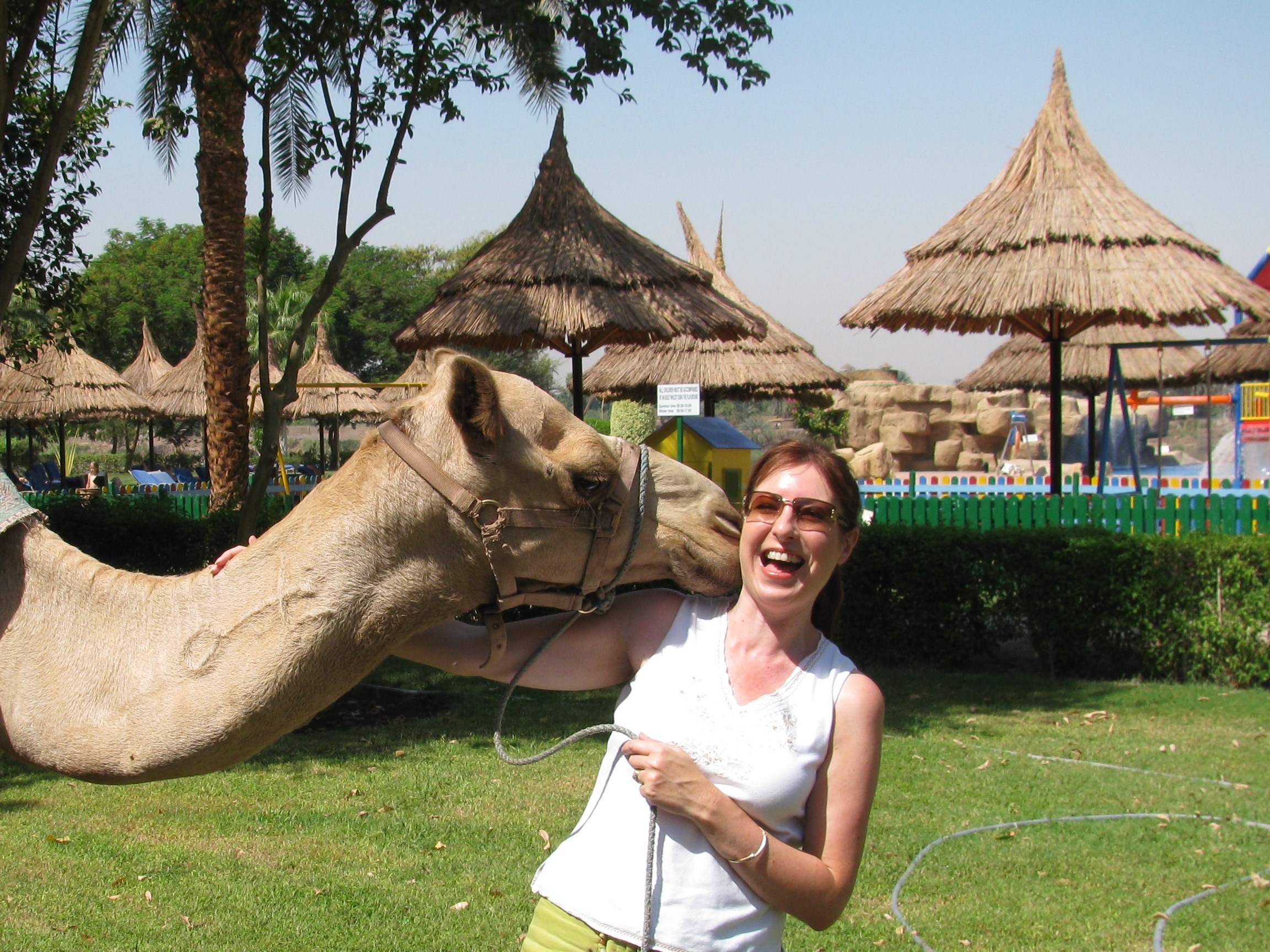
Here I am with Ramses the camel at the Jolie Ville hotel in Luxor in 2009.  (Ramses features in both Carter’s Conundrums and Tutankhamun’s Triumph).  2009 saw the Khan el Khalili bombing in Cairo.

IMG_2867_2

Back in 2011 – here I am at the Ramesseum on the West Bank in Luxor.  It was March, just a couple of weeks after the Revolution of the Arab Spring.  We had most of the tourist sites completely to ourselves.  It was an amazing experience.

IMG_0439

My next trip was January 2012 – pictured here at the Avenue of Sphinxes at Luxor temple.  Demonstrations took place in Cairo’s Tahrir Square in June following Mubarak’s trial.


IMG_2007Then April 2013.  President Morsi was running the show, but it was an uneasy kind of calm before the storm of the coup d’etat that removed him from office in early July.

IMG_4730My last visit was in July 2014, a quiet break to the Jolie Ville hotel in Luxor (a beautiful retreat set on its own island in the Nile).  Tragically, I was one of only 24 guests – tourism still reeling from the recent political events.

Reading this post, I guess you might conclude there’s never a good time to visit Egypt as a tourist.  I’d have to disagree.  I think it’s possible to be in the wrong place at the wrong time anywhere in the world.  I don’t court trouble, and I’d steer clear of the Sinai Peninsular at the moment – but Egypt’s been my favourite holiday destination for the last decade.  Modern Egypt is unsettled for sure.  But historical and archaeological Egypt is not to be missed.  And the sun always shines!

Fiona Deal – Jan 2015 (updated from blog originally posted Feb 2013)

Author of Meredith Pink’s Adventures in Egypt, available to download or in paperback on Amazon.

BookCoverPreview.doBookCoverPreview.doHatshepsut's_Hideawa_Cover_for_KindleBookCoverPreview.doBookCoverPreview.doBookCoverPreview.do


What sparked my enduring fascination with Egypt?


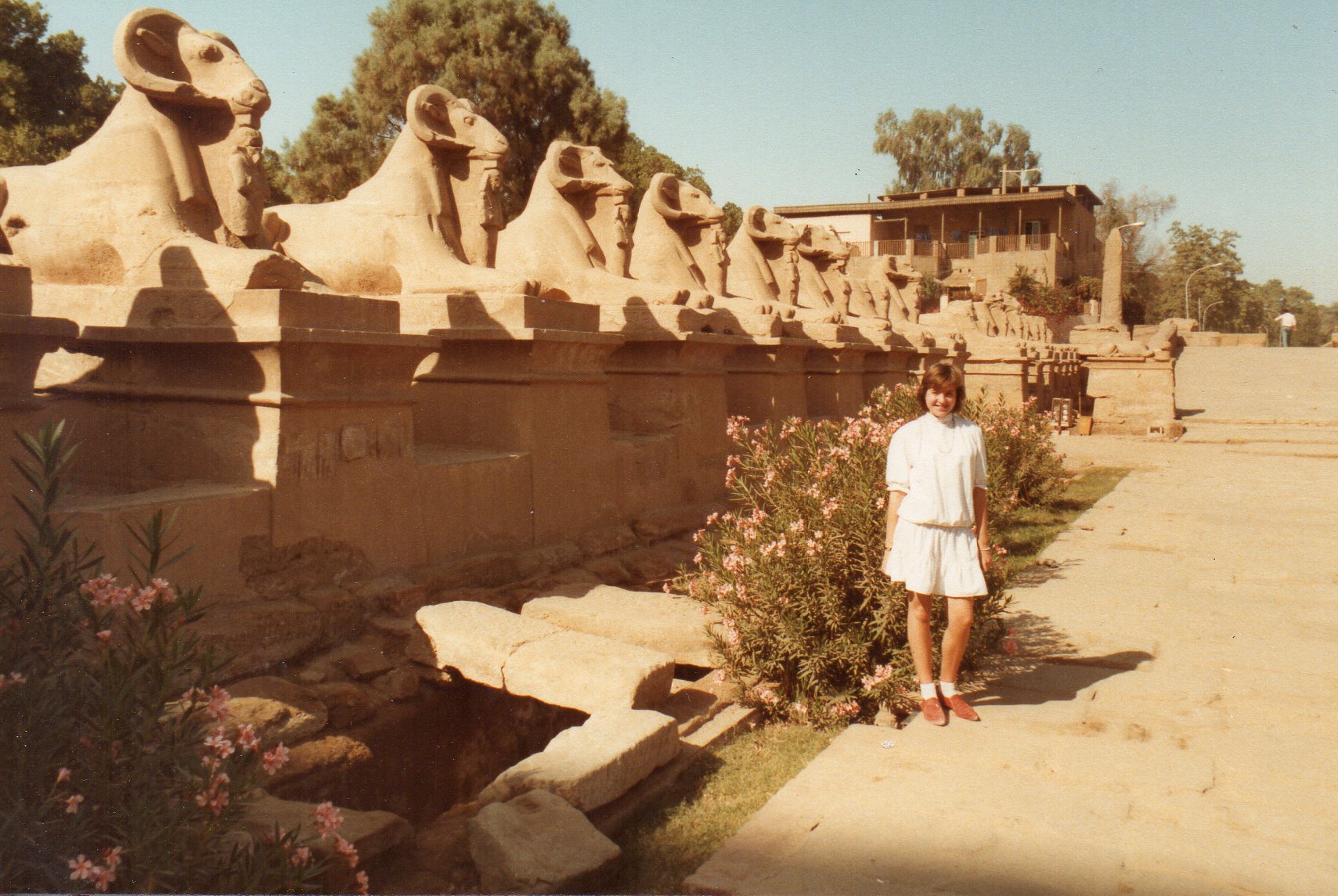
img230Ok, so here I am aged 16  with the ram-headed sphinxes at Karnak.  It’s October 1983.  I’m on my half-term break.  I’m in Egypt with my parents and younger brother, on the cheap, courtesy of my dad working for an airline and qualifying for concessionary travel.

Cute red pixie shoes, huh?  It took me almost thirty years to actually start writing adventure stories about the land of the pharaohs.  Yet the fascination was sparked back then.  Why?

Perhaps something in the light quality?  It’s a soft pink in Egypt – you can kind of see it in the sky in the photo as it fades to the distance.  I think this has something to do with the quantities of sand and dust in the atmosphere, and so little rain.  Whatever, it makes for some of the most spectacular sunsets on earth.  And a filmy haze over everything that’s like looking at everything in soft-focus.  There’s something very romantic about light quality I think.

Then there’s the immense SCALE of everything.  Standing on the giza plateau and craning up at the great pyramid.  Likewise in Karnak, dwarfed by the columns in the Hypostyle Hall.  How did they do it without modern equipment and engineering?  Was it spacemen?  As a teenager, this was an intriguing thought!

And, of course, the history.  Stepping into the thick, stifling atmosphere of a centuries-old tomb that looks as if the artisans laid down their paint-pots just yesterday.  Learning from the guide that they got light into the depths of their ancient sepulchres while they were carving and decorating them by reflecting the sun from great sheets of electrum at the tomb entrance.  True?  Possibly – not sure if it was really electrum !  But the guides demonstrated it ably enough with a metal biscuit tin.

Standing inside Tutankhamun’s tomb … gawping at the sarcophagus that still contained the remains of the boy king …  Trying unsuccessfully to grapple with the unimaginable period of time – thirty-or-so centuries – that he’d been there.

Or perhaps it was the weird and wonderful stories about the pharaohs and their queens themselves.  Did Ramses II REALLY have more than two hundred children, some by his own daughters?  It was a thought to make me squirm – standing alongside my own father listening to the guide.  Were brothers and sisters REALLY married to each other?  I remember looking at my fourteen year old brother and thinking ‘ugh’.

So somehow, it’s all larger than life, a little bit Hollywood, and desperately mysterious and intriguing.  Nowhere like it on earth !  It reached out and grabbed me.  More than thirty years later it shows no sign of letting go.