Tourism in Egypt takes a hit

All Giza Pyramids in one shot. Русский: Все пи...

All Giza Pyramids in one shot. Русский: Все пирамиды Гизы на изображении. Español: Las Pirámides de Guiza (Egipto). Français : Les Pyramides de Gizeh (Egypte). Català: Les Piràmides de Giza, a Egipte. (Photo credit: Wikipedia)

During these troubled times in Egypt it’s impossible not to spare a thought for all those whose livelihood depends on a thriving tourist industry.

Since President Morsi was ousted last month most Western governments have issued a travel warning against travel to Egypt and asked their citizens there to depart.  Pre-revolution 12% of Egypt’s workforce was employed in the tourism sector.  In 2011 visitors decreased by 37%.  I haven’t seen figures for 2012 or this year but on my last trip to Luxor in April the historical sites remained uncrowded and there were more cruise boats moored six-or-seven-deep along the riverbank than sailing up and down the Nile.

English: Temple of Hatshepsut, Luxor, Egypt

English: Temple of Hatshepsut, Luxor, Egypt (Photo credit: Wikipedia)

Those of us for whom Egypt is a favourite holiday destination can only hope for a swift resolution to the current political turmoil and spare a thought for all those people who contribute to making our visits so memorable and who must now be going through such tough times.

Great Temple at Abu Simbel, Egypt

Great Temple at Abu Simbel, Egypt (Photo credit: Wikipedia)

Egypt has a unique and awe-inspiring cultural heritage.  Having been preserved for all these millennia it would be a tragedy to watch it to crumble beneath the weight of political chaos now. I can only hope the reports that some of Egypt’s ancient sites are unprotected and vulnerable to thieves are exaggerated.  So my wish today is for a speedy return to calm so that Egypt may once again welcome foreign visitors so we can marvel at her monumental history and help preserve it for future generations.  And, if you’d like to go there in your imagination since you can’t go there for real right now, you may wish to sample my trilogy of novels set in Luxor…

Fiona Deal

Book 1 of Meredith Pink's Adventures in Egypt

Book 1 of Meredith Pink’s Adventures in Egypt

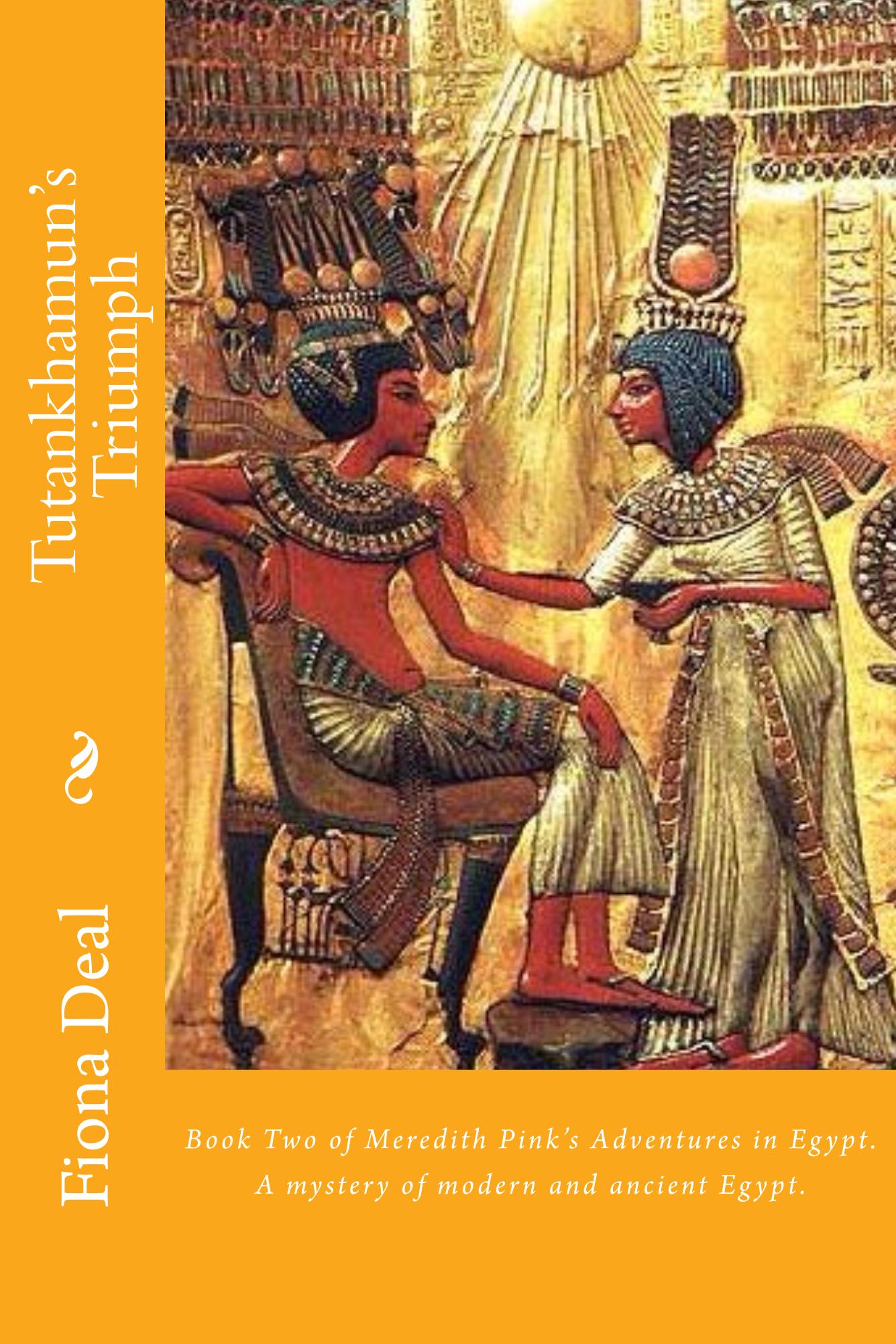
Book 2 of Meredith Pink's adventures in Egypt

Book 2 of Meredith Pink’s adventures in Egypt

Author of Carter’s Conundrums, Tutankhamun’s Triumph and Hatshepsut’s Hideaway – following Meredith Pink’s Adventures in Egypt – all available in Kindle or paperback on Amazon.com and Amazon.co.uk.

Hatshepsut's_Hideawa_Cover_for_Kindle

History repeats itself in Egypt

So, Morsi has been ousted and scenes of the celebrations in Cairo’s Tahrir Square have been flashed around the globe.

Photo Credit: Amr Nabil pic.twitter.com/Utceetv5zI

Photo Credit: Amr Nabil pic.twitter.com/Utceetv5zI

As an outsider to Egypt I find it hard to take a definitive view of the happenings in Egypt this week.  The closest thing I can compare it to is trying to look inside someone else’s marriage.  Only the people on the inside really know the truth.  It’s easy to take a ‘superior’Western view and claim the Egyptian’s first foray into democracy has been a disaster.  But I’d hesitate to take the moral high ground when one looks at the history of bloodshed in the West through which, arguably, our own democracy has been won. Although perhaps our willingness to stand by our own  decisions is telling.  As a friend of mine said, ‘when we choose the wrong government – and when did we ever choose the right one – we live with it.’  That’s democracy.  I guess the scenes of mass celebration tell their own story, with some Egyptians claiming they have now completed the revolution they started in 2011.  The governments in the West state they cannot support the military intervention in Egypt that has removed a legitimately elected president.  A cynic might say of course not.  For how precarious might that make their own position?  And the media reporters comment sagely about the precedent set as ‘the people’ make it clear that if they have the power to remove one elected president, they can surely do so again.  But was Morsi the architect of his own downfall?  At the risk of writing a political blog and as an outsider, I think my view would be yes.  I certainly heard no words of conciliation or compromise in the speech he gave earlier in the week.  The rot seemed to set in when he granted himself what one reporter called ‘Pharaonic’ powers in November last year – although under extreme pressure he rescinded most of them. And it’s clear he was presiding over a sinking economy.  As a regular tourist to Egypt, I was dismayed on my last visit in April, to experience the almost-daily power cuts and to see the queues for cooking gas.  And Morsi seemed intent on killing the already afflicted tourist industry stone dead.  His decision a couple of weeks ago to appoint as Governor of Luxor a man implicated in the terrorist atrocity at Hatshepsut’s Temple in Luxor in 1997 seemed calculated to ensure tourists wouldn’t venture back to Egypt but surely succeeded only in hastening his own departure from office.  The people rejected him for promoting an Islamist agenda.  And so he now languishes under house arrest and  the military run the show once again.

Some might say there is nothing new under the Egyptian sun and history has an interesting habit of repeating itself.  It’s possible one of the first military coups in Egypt was led by General Horemheb at the end of the once-glorious 18th Dynasty, famous for such names as Hatshepsut, Thutmosis III and Tutankhamun.  More recently, in 1952, the Association of Free Officers that ultimately saw President Nasser come to power, led the movement to topple the monarchy and remove King Farouk from his throne.  Nasser is now feted as one of the towering political figures of modern Middle Eastern history and politics in the twentieth century.  Interestingly, he distrusted the Moslem Brotherhood, and did much to clip their wings. Let’s hope there’s someone waiting in the wings in Egypt now who can lead the country on to better days.

So, moving from these political musings to some more personal musings. Where does all this leave me as the writer of a series of adventure/mystery stories set in present-day Egypt?  My first three published novels are set in the period May – December 2012, when things were relatively calm; although the post-revolutionary landscape provided a useful backdrop to the stories.  Each of these adventures has a link to ancient Egypt’s 18th Dynasty.  My current novel, to be published next month, uses the more modern history around King Farouk’s removal and subsequent exile as its basis.  I’m wondering, with the British Foreign Office’s rulings  against all but essential travel to Egypt whether I may be forced to bring Merry and Adam home.  Perhaps these are the risks a novelist must take in deciding to set her series in such turbulent times. The trouble with not writing purely historical books is not knowing the ultimate outcome. All I can do is hope and pray that Egypt can return to a more stable footing and happier times.

Book 1 of Meredith Pink's Adventures in Egypt

Book 1 of Meredith Pink’s Adventures in Egypt

Fiona Deal -Author of four books following Meredith Pink’s Adventures in Egypt

Book 2 of Meredith Pink's adventures in Egypt

Book 2 of Meredith Pink’s adventures in Egypt

Hatshepsut's_Hideawa_Cover_for_Kindle

Egypt – beyond the tourist bubble

IMG_0973IMG_0975On a recent trip to Luxor, a couple of experiences got me thinking about life outside the tourist bubble…

Firstly, I decided one evening to eat outside my hotel and visited a charming restaurant in downtown Luxor.  It was warm  and I was glad of the air conditioning.  No sooner had I given my order – for a rather tasty Egyptian tagine – than all the lights went out and, yes, you guessed it, the air conditioning unit shut down.  Apparently these power cuts were a daily – even several times daily – occurrence.  Candles immediately appeared on all the tables and each of the waiters carried a small battery operated torch.  Luckily an emergency generator kept the kitchen operational.  But as the temperature started to rise (no air conditioning and all those candles) it struck me what a challenge it must be for local businesses having to deal with this type of interruption to their service on a nightly basis, and at peak trade.  As one of the staff said to me, “When this happens in the evenings we’re at home, the heat and the pitch dark mean all you can do is lie down and pretend to be a vegetable.”  I loved the prosaic attitude.  But with temperatures at this time of year regularly hitting 40 degrees (and not cooling off much at night), it made me realise how much we tourists take the electricity supply for granted.  Of course, the power cuts don’t affect the hotels because they have their own on site generators.  Apparently the power cuts are the result of the government’s agreement to sell electricity to Israel.  This link is the latest I’ve been able to discover about this agreement.  I couldn’t quite make up my mind what I thought about all this.  One one hand, I understand the government’s need to underpin the Egyptian economy – which relies so heavily on tourism (so sadly depleted since the revolution) and agriculture.  But for this to be at the expense of local businesses struggling to keep their own heads above water during these tough times didn’t sit completely comfortably with me.

The second experience that gave me pause for thought was during a trip to the West Bank to visit some of the tombs of the nobles.  These tombs riddle the Theban Hills giving it something of the appearance of a mountainous Swiss cheese.  What’s fascinating is that over the centuries a modern village called Gurneh sprang up on the hillside, in many cases with the dwellings built literally on top of the ancient tombs.  I remember on my first visit to Luxor in the 1980’s, the village was still there – although over the last decade or so the villagers have largely been relocated to the modern, purpose built  New Gurneh to enable proper excavation of the Nobles’ tombs to take place.

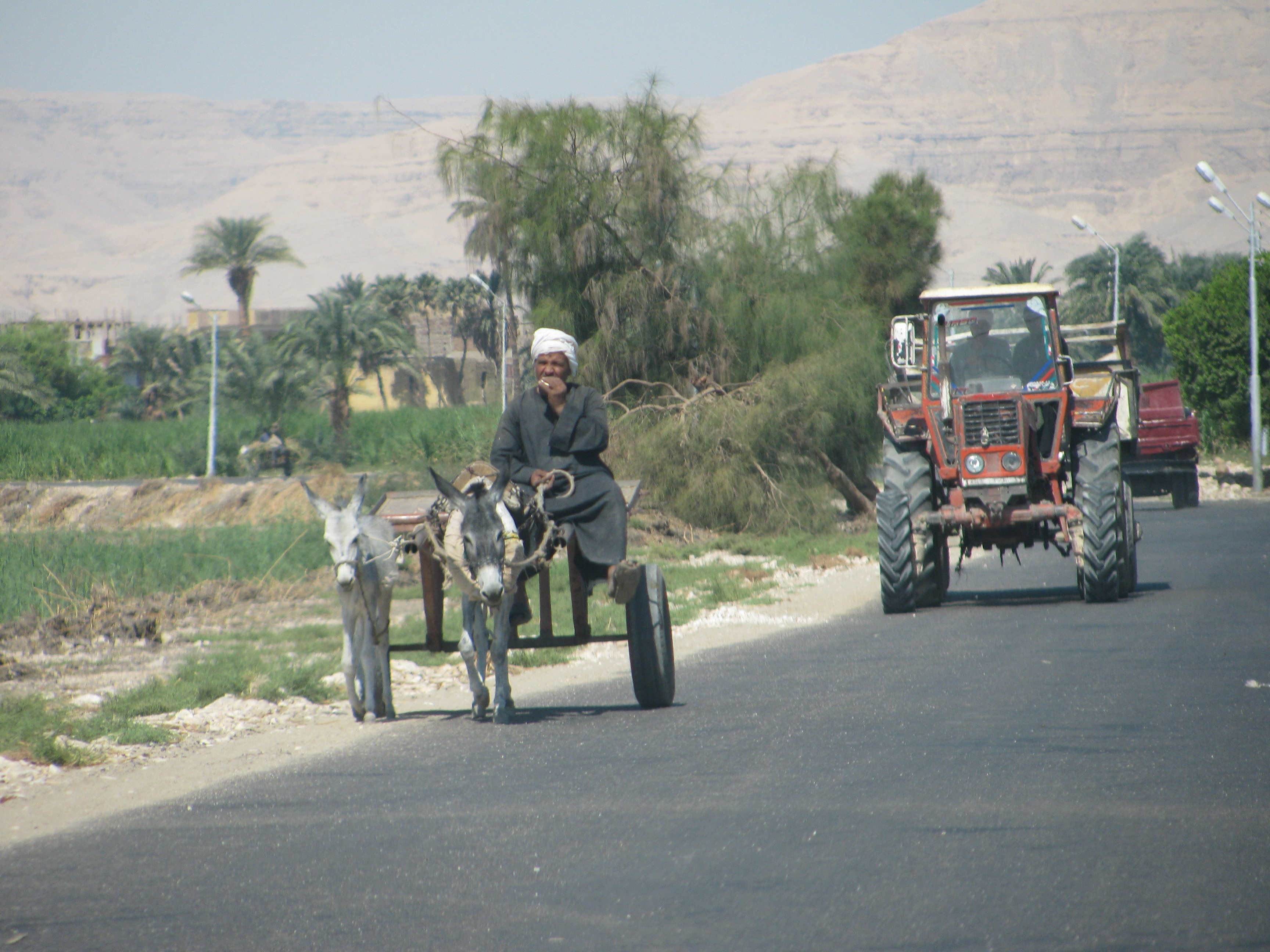
IMG_4401My taxi driver for my excursion to the West Bank was a friendly chap (I’ve yet to meet an unfriendly one) called Hassan.  Once he’d deposited me at the tombs I’d chosen to explore (see my previous blog about the El Khokha tombs), he then offered to drive me around the village of New Gurneh so I could see for myself the new homes so many people have relocated to.  I was impressed.  He showed me the school and the hospital.  Then, on the return journey, he suggested I might like to call in on his family for some tea.  Being decidedly hot and dusty by this stage, this was an appealing idea.  The Egyptian tea is hot and sweet, served without milk, and usually with fresh mint.  He took me to a rather tumbledown mud brick house near the canal that runs inland from the Nile along the West Bank.  It was deliciously cool inside, the windows shuttered and the thick mud brick walls keeping the heat of the sun out.  The interesting thing was that tea wasn’t the only thing I was offered.  As I sipped the hot, fragrant beverage, his brother brought me a selection of ancient Egyptian artefacts to look at.  Hassan carefully explained in rather broken English that his family grew up in the old village of Gurneh.  Many of them had ancient tombs as cellars.  As children they made a habit of digging for treasure, and the artefacts I was being shown now represented just one families’ collection.  There were lots of small carved figurines made from faience, and small stone scarabs and carved cats.  The piece de resistance was an exquisitely carved stone head of a pharaoh, complete with the uraeus snake rising from his brow.  It was heavy, probably solid granite, and rested in my palm, probably about the size of a large orange.  Perhaps unsurprisingly, Hassan and his brother very keen for me to make an offer on any of the pieces that took my fancy.  This presented me with something of a dilemma.  I did not wish to appear rude in the face of their hospitality and I could certainly sympathise with their attempts to supplement a no doubt meagre family income.  But at the same time  I had horrible visions of being stopped by customs officials at the airport and trying to explain how a genuine pharaonic artefact came to be in my luggage.  It was enough to bring me out in a cold sweat.  But it made me wonder …  If this was just one families’ selection of the artefacts they’d dug up, effectively from their own back yards, how many more such exquisite and possibly important pieces must there be stored in cupboards and boxes in the homes of the ordinary people of Luxor’s West Bank?  The Egyptian people live a simple agricultural life.  I’ll be honest, I was a little bit horrified to be offered antiquities for sale in a private home.  But “finders-keepers” is a deep-seated concept in many cultures.  So who am I to judge these warm, welcoming people for trying to earn a few extra pennies from the ancient Egyptian artefacts that literally turned up under the floorboards, so to speak?  I resisted the temptation and eased my conscience with a generous tip when Hassan deposited me back at my hotel.

So, the economy in Egypt is struggling and the local people seize whatever opportunities they can to make a living in often difficult circumstances.  I admire them.  And I do what I can… just small things like preferring to visit the sites by taxi and in the company of an Egyptian guide, rather than on an organised tour with one of the travel agencies.  I’d rather put my money in the pockets of the local people where possible.

These little slices of everyday Egyptian life are so special.  I am a writer, and have so far published three mystery/adventure stories set in present-day Egypt, so experiences like these are invaluable.

I have been back from my most recent trip for a few weeks now.  When I look back I find it is not the tombs and temples that made the most significant impression on this occasion.  I remember the night the lights went out in the restaurant, and I remember the thrill of handling a genuine artefact in a humble homestead on the West Bank.  These are memories to treasure – a little slice of the real Egypt outside the tourist bubble.

Fiona Deal
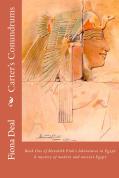
Book 1 of Meredith Pink's Adventures in Egypt

Book 1 of Meredith Pink’s Adventures in Egypt

Book 2 of Meredith Pink's adventures in Egypt

Book 2 of Meredith Pink’s adventures in Egypt

Author of Carter’s Conundrums, Tutankhamun’s Triumph and Hatshepsut’s Hideaway – following Meredith Pink’s Adventures in Egypt – all available in Kindle or paperback on Amazon.com and Amazon.co.uk.

Hatshepsut's_Hideawa_Cover_for_Kindle

Places to stay in Egypt – great book locations

Jolie Ville Kings Island

Jolie Ville Kings Island (Photo credit: iifu)

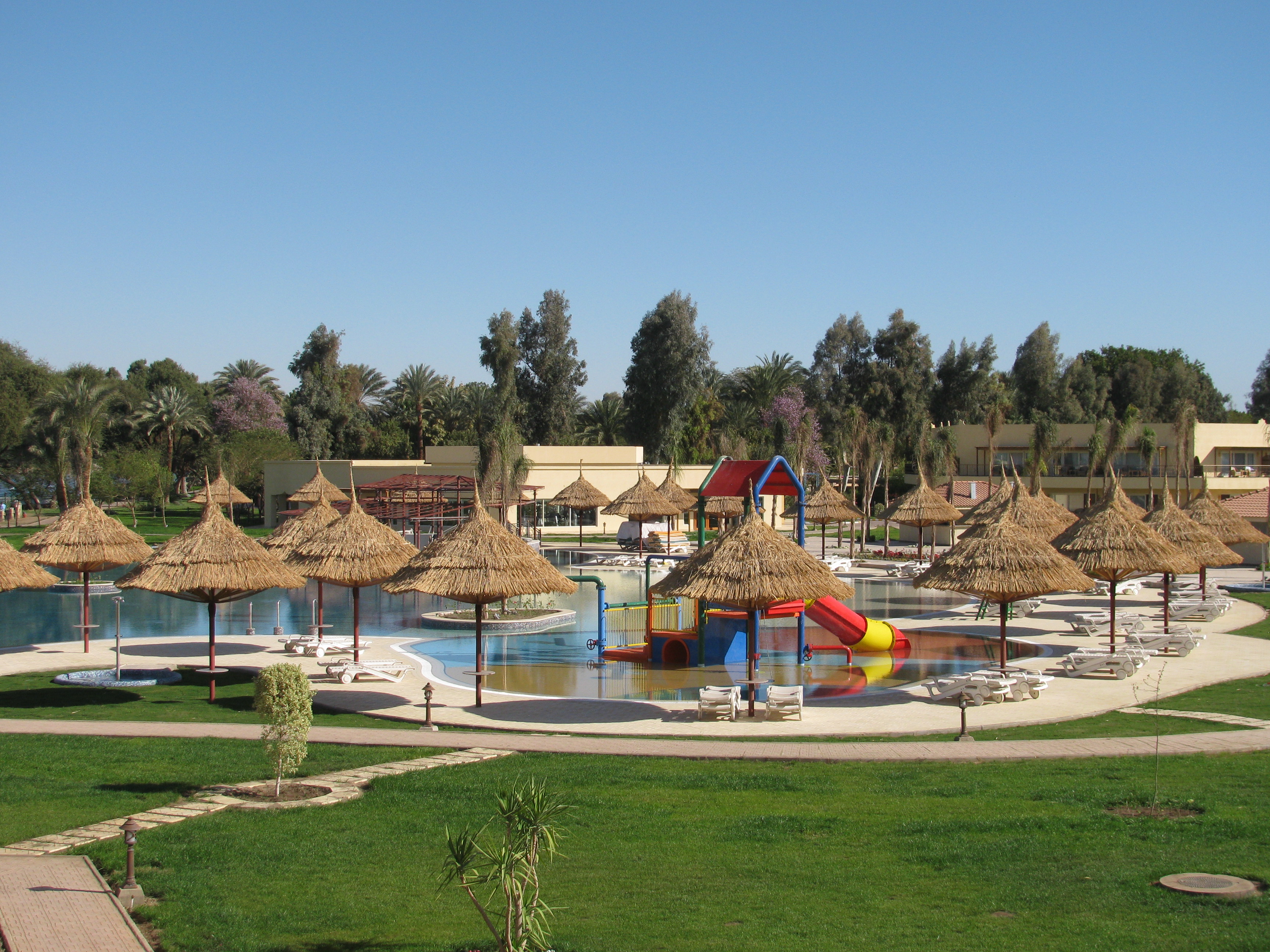
I have now completed three novels set in Egypt and am approximately two-thirds of the way through the fourth.  My central character, Merry, is a tourist to Egypt and starts her series of madcap adventures in Carter’s Conundrums while staying at the Jolie Ville hotel, which is situated on Kings Island, just outside Luxor.  I’ve been lucky enough to stay at the delightful Joilie Ville twice, in 2009 and 2011.  The sunsets looking across the Nile are the most spectacular I’ve seen anywhere in the world.IMG_2749

IMG_4496Merry also gets the chance to stay in two of Egypt’s finest old hotels – both world class – both dating from Victorian times.  The first is the Mena House, once a Khedive hunting lodge built at Giza, a stone’s throw from the foot of the pyramid plateau.  Here’s a snap of me taken in 2008 in the Mena House garden, with the pyramids in the background.  It was a hazy day, but you get the general idea of how close they are.

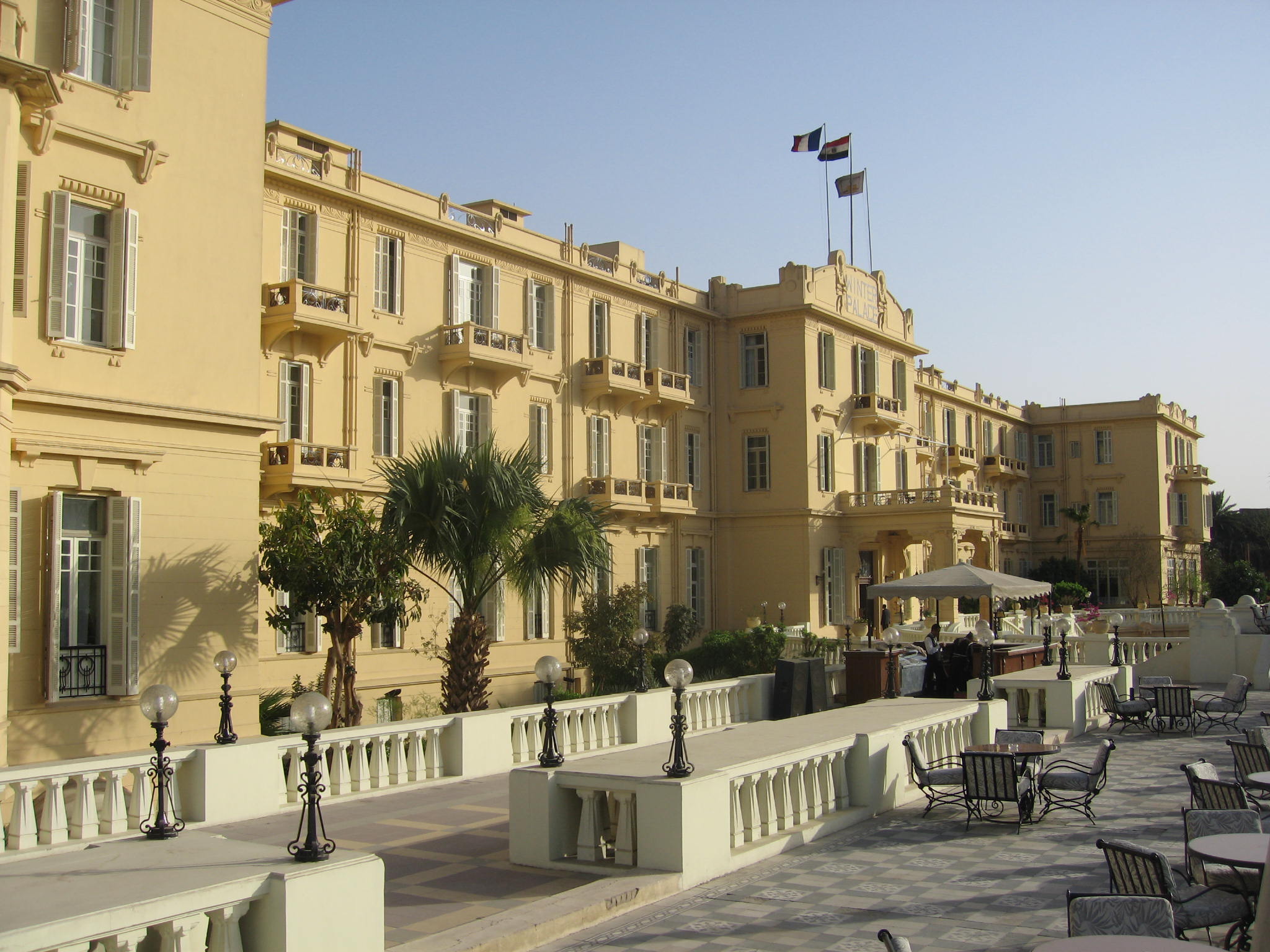
IMG_4557The second of these grand Victorian hostelries is the impressive Winter Palace in Luxor.  This is where Lord Carnarvon stayed during the heady days of the discovery of Tutankhamun’s tomb by his excavator, Howard Carter.  I don’t imagine it’s changed much since then.  It makes a wonderful setting for a novel.  I’m also setting chunks of my latest novel, Farouk’s Fancies there – to be published this summer.  It’s no coincidence that King Farouk, the last sovereign of Egypt – who was deposed in the 1950’s an exiled to Europe – once used The Winter Palace as his home in Luxor.

IMG_1094While Carter’s Conundrums and Tutankhamun’s Triumph are both set at the Jolie Ville hotel, the third book, Hatshepsut’s Hideaway, takes Merry on a Nile cruise from Luxor to Aswan and back for her latest adventure.  I chose as my setting the wonderful steamship SS Misr, which dates from 1918 and was lovingly restored by Jules Verne.  SS Misr was also once owned by King Farouk, who hosted lavish parties on board.  I took a Nile cruise on the Misr in 2008 -a superb trip.

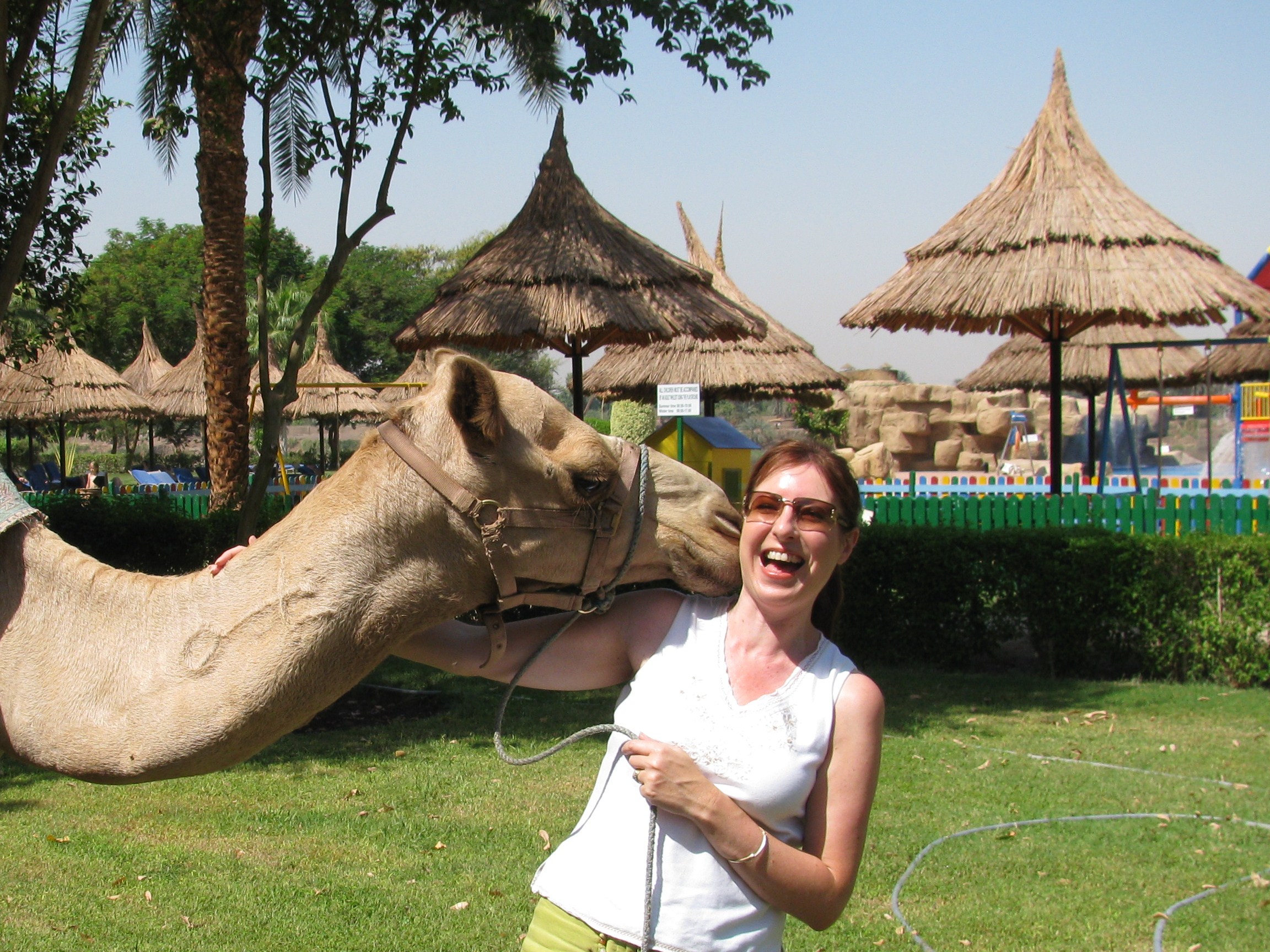
IIMG_0775f you’re travelling to Egypt – and I heartily recommend it despite the political situation – you’re spoilt for choice for wonderful places to stay.  My personal favourite has to be The Jolie Ville.  How can you beat a hotel that comes complete with its own star attraction – Ramses the camel offering rides to all and sundry?  Nothing comes close to the experience of sipping a cocktail while watching the fiery sun slowly slipping beyond the Theban Hills on the West Bank of the Nile.  Enjoy!

IMG_1132

FionaIMG_0851

Don’t miss the Tombs of the Nobles – el-Khokha Tombs

IMG_2007One of the highlights of my trip to Luxor was the chance to visit some of the little-known Theban Tombs.  They riddle the Theban Hills like a mountainous Swiss cheese.  According to my guide book there are thousands of them, although only a handful are open to the public with a ticket purchased from the ticket booth near the Colossi of Memnon.  I visited the three tombs of El-Khokha.IMG_4401

IMG_4389The tomb of Dhuti is unusual for containing seated statues,presumably images of the deceased tomb-owner himself, gazing over his grave goods.

IMG_4395Nefersekhuru and Neferrenpet were both Scribes of the Treasury in the Estate of Amun-Ra during the second half of the reign of Ramses II,

and would presumably have known each other.  It’s tempting to see thrm trying to out-do each other with their tombs.  Both bear their original paintings, the colours remarkably preserved considering the passage of some three thousand years.  Nefersekhuru’s tomb has a beautifully painted geometrically patterned ceiling, shown here in the photograph.

IMG_4394The Theban tombs show us a slice of real life that’s not so easy to glimpse in the royal tombs, which are laden with religious iconography.  These are the houses of eternity that you or I may have chosen for ourselves, had we happened to live in dynastic Egypt and boast a reasonably good job.  Here’s just a selection of the scenes.  The guard on duty was more than happy for me to take photographs in return for a little baksheesh.  I switched off the flash of course.

IMG_4398Do visit if you ever get the chance.  These wonderful little sepulchres are not to be missed.

Fiona Deal

Author of Meredith Pink’s Adventures in Egypt.

Book 1 of Meredith Pink's Adventures in Egypt

Book 1 of Meredith Pink’s Adventures in Egypt

Dendera Zodiac

The Dendera Zodiac was on the ceiling of the G...

The Dendera Zodiac was on the ceiling of the Greco-Roman temple of Hathor at Dendera (Photo credit: Wikipedia)

Ok, so here’s the question that’s been playing on my mind today.  Is it a good thing or not that the original Dendera zodiac was chipped from the wall of the temple at some point during the nineteenth century by the early explorers of Egypt and now resides in Le Louvre in Paris?  Would it not be better for it to have remained in situ in the wonderful Ptolemaic temple where it was first carved?

I visited Dendera Temple yesterday.  It’s an hour’s drive north along the desert road from Luxor; or it’s possible to take a boat trip if you want to make a whole day of it.

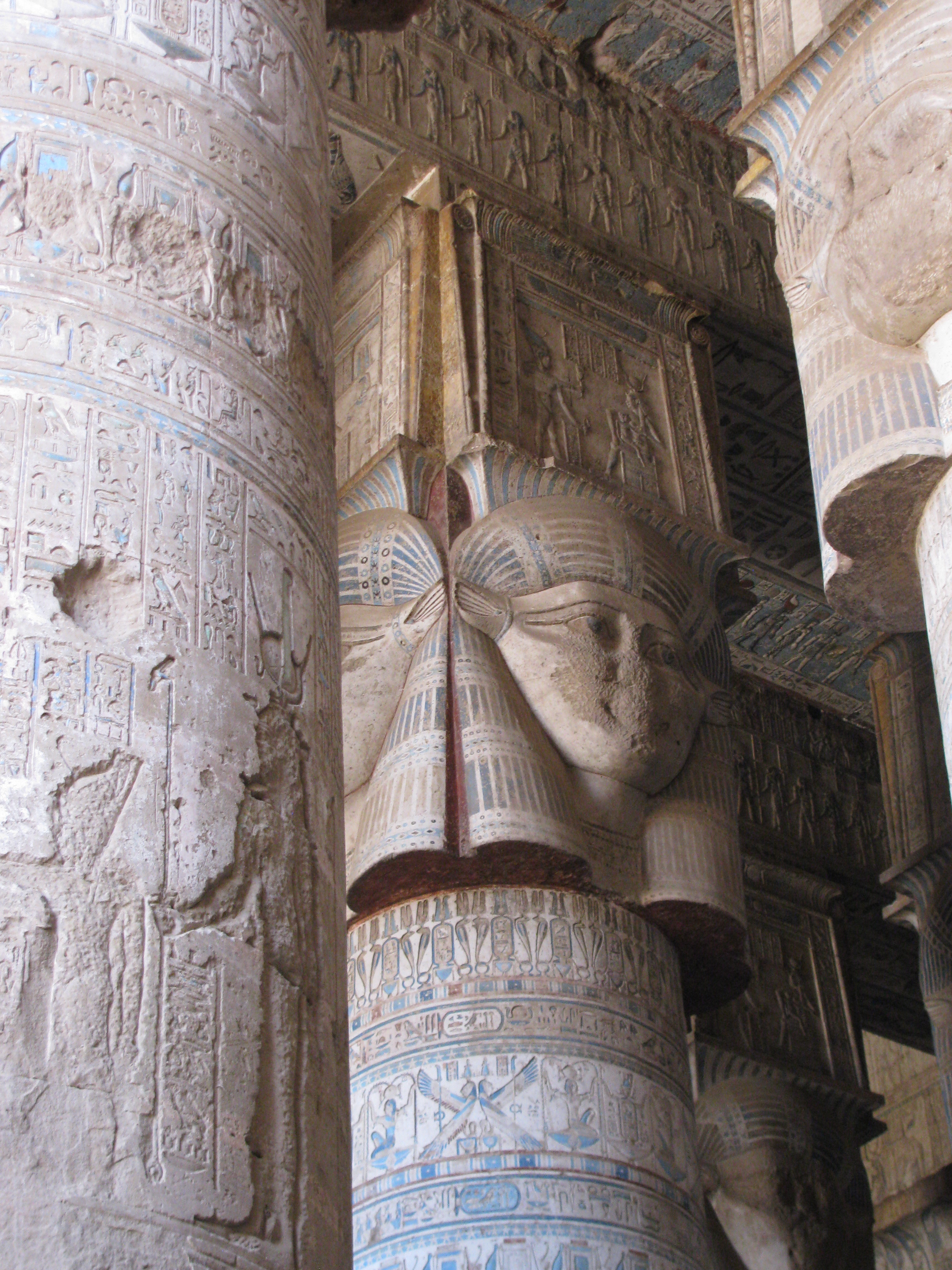
IMG_4452The temple sits on the West Bank of the Nile, opposite the modern town of Qena. It’s quite simply stunning.  A beautifully preserved temple, full of the chirping of hundreds of sparrows.  The tops of the columns in the Hypostyle Hall are unusual for having the Hathor-headed capital – still with original colours.   It’s right up there with some of the other hugely impressive temples of ancient Egypt.

IMG_4454This temple was built towards the end of the Ptolemaic period, some two thousand years ago.  There’s a huge carving on the back wall of Cleopatra with Caesar and their son Caesarian who was sadly never to assume his place at Pharaoh once the Roman Empire fully took charge after the joint suicide of Cleopatra and Mark Antony.

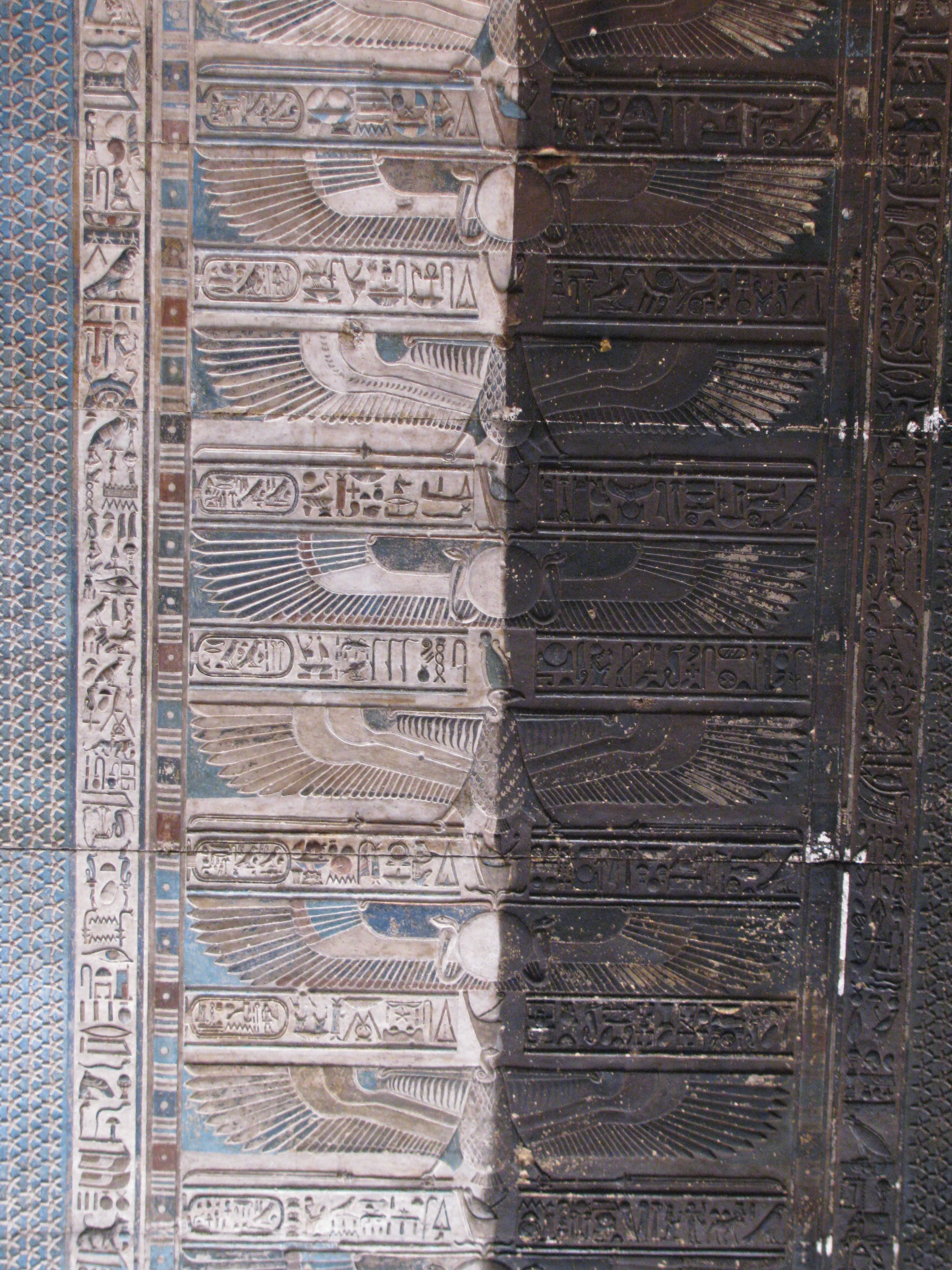
IMG_4451 A clean-up job has begun inside the temple.  The roof is blackened from the centuries when the temple almost disappeared beneath the sands of time; and the old Bedoiuns used to camp out inside the temple walls, and build fires to keep warm and for their cooking pots.  The smoke from these fires has blackened the roof with centuries’ worth of soot.  The careful cleaning job is revealing a remarkable ceiling, beautifully painted and with its original colours still largely intact.  This picture looks like it’s half in the shadow and half in the light.  Actually, it shows half the ceiling – cleaned – and the other half still blackened with dirt.

But back to the question that’s been bugging me.  The trouble is, I can argue it both ways.  The museums of the world – notably the British Museum in London, Metropolitan in New York, Le Louvre in Paris and the Turin Museum in Italy – are filled with treasures taken from Egypt in those early days of exploration before the Egyptian Antiquities Service put a stop to it in the early twentieth century.

My heart tells me that Egypt’s treasures should have remained in Egypt.  I would love to visit the temples and see them filled with their statues and original wall carvings.  I can’t help but feel Egypt has been robbed of some of its fabulous heritage.  But it’s also a simple fact that some people will never get the opportunity to travel to Egypt – and to see the fabulous statuary and artefacts in the museums of the world is better than never seeing them at all.  And perhaps this is what inspires many people to come to Egypt in the first place.  So it’s a circular argument in the end.

But standing in Dendera temple yesterday, and looking at the huge metre-square replica of the zodiac on the roof of the dark little chapel where the original once resided; I couldn’t help but question the ethics of those original explorers who chipped this remarkable carving off the wall and shipped it to Europe.

Fiona Deal – Author of Meredith Pink’s Adventures in Egypt.  Three modern adventure stories set in Egypt, with ancient mysteries to solve…

Pharaoh leaves nothing to chance

Façade, Temple of Seti I, Abydos, Egypt

Façade, Temple of Seti I, Abydos, Egypt (Photo credit: Wikipedia)

Yesterday we visited Abydos, a drive of about 2 hours north from Luxor along the desert road that connects Cairo with Aswan.  Abydos is one of the oldest sites in Egypt and contains archaeological remains from every period of ancient Egypt.

A cult grew up in ancient times that it was the burial place of the god Osiris; and for a thousand years or more ancient Egyptians made pilgrimages to the site to make offerings.

IMG_4438Today, it’s most famous for the temple of Seti I (father to the prodigious builder Ramses II) who ruled at the start of the 19th Dynasty, a little over three thousand years ago.  The quality of the carving, many in raised relief, is outstanding.  The detail on Seti’s crown in this photograph, for example, is exquisite.

IMG_4443The temple is contemporary with the great Hypostyle Hall of pillars at Karnak.  But unlike at Karnak, here at Abydos the original colours of the wall reliefs are beautifully preserved.  Perhaps because of this, the content of the scenes is easy to make out, even for the untrained eye.  Here we have Seti I making offerings before all the major gods of the ancient Egyptian pantheon.  We see him before falcon-headed Horus, ram-headed Knum, ibis-headed Thoth, lion-headed Sekhmet, jackel-headed Anubis and crocodile-headed Sobek.  We see scene after scene of him before Osiris (god of the afterlife) and his wife Isis, with their son Horus.

Temple of Osiris at Abydos

Temple of Osiris at Abydos (Photo credit: Wikipedia)

Of course, these scenes are replicated on temple walls the length and breadth of Egypt.  But what really struck me at Abydos – where they hit you square between the eyes – is how little Pharaoh was prepared to leave to chance.  Literally every square inch of his temple is decorated with scenes of him worshipping the gods.  I’m very sure he was well looked after in the afterlife!

Abydos is also famous for its ‘king-list’.  This is a wall carved from one end to the other with the cartouches of the kings of Egypt who preceded Seti I – from Narmer who unified upper and lower Egypt in the Old Kingdom through the Seti’s father Ramses I.  Notably, there are a few key individuals missing.  Hatshepsut has been left out – possibly because she was a woman.  And the controversial kings of the Amarna period (Akhenaten, Tutankhamun and Ay) also fail to get a mention.  The Amarna period was within the living memory of the older folk among the population – a time of social upheaval and religious oppression.

Abydos is a wonderful temple – well worth the drive from Luxor.  And I think my visit may have given me another idea for a book!

Fiona Deal

Author of Meredith Pink’s Adventures in Egypt.

Book 1 of Meredith Pink's Adventures in Egypt

Book 1 of Meredith Pink’s Adventures in Egypt


The curse of Tutankhamun

George Herbert, 5th Earl of Carnarvon, at Howa...

George Herbert, 5th Earl of Carnarvon, at Howard Carter’s home on the Theban west bank, according to Griffith Institute, Oxford (Photo credit: Wikipedia)

The curse of Tutankhamun was born ninety years ago today, with the untimely death of his patron and benefactor Lord Carnarvon, allegedly of an infected mosquito bite.

The story of the curse started circulating immediately.  Despite persistent ill-health following a near fatal car accident as a younger man, Lord Carnarvon was only in his fifties when he died on 5 April 1923.

Howard Carter famously discovered Tutankhamun’s tomb on 4/5 November 1922, and Lord Carnarvon was there to enter it with him for the first time three weeks later.

The story of the pharaoh’s curse that ‘death shall come on swift wings to those who enter this place’ took hold immediately.

Here’s a link to an article explaining a bit more.  Mummy’s curse.

As a matter of chance, today I visited Howard Carter’s house on the West Bank of the Nile, at the entrance to the Valley of the Kings.  It’s a hugely atmospheric place, now open as a museum.

Book 1 of Meredith Pink's Adventures in Egypt

Book 1 of Meredith Pink’s Adventures in Egypt

It was very evocative for me to be back in Howard Carter’s house, as this is the setting for the opening scene of my first book, Carter’s Conundrums.  Merry discovers she’s been inadvertently trapped there for the night.  It’s the start of a thrilling adventure.  Trying to escape, she smashes the picture frame of a watercolour painting  by Carter … only to find a secret message and some mysterious hieroglyphics inside.  It sets her off on a quest to solve the puzzle she’s been presented.

Here’s a photograph I took this morning showing Howard Carter’s study – this is the window Merry attempts to escape through, and a replacement for the lamp she smashed !

IMG_4418

Book 2 of Meredith Pink's adventures in Egypt

Book 2 of Meredith Pink’s adventures in Egypt

I also made use of the story of the pharaoh’s curse in my second book, Tutankhamun’s Triumph.

Everywhere you look in this ancient land of the Pharaohs there’s something to inspire the imagination.

Tonight I will raise a glass to toast the memory of Lord Carnarvon, and the ‘wonderful things’ he and Howard Carter discovered for the modern world.

Fiona Deal

Cruising the Nile


IMG_3094
The palm trees nod politely to each other along the riverbank.  Black and white kingfishers dart in and out of the shallows, playing a game of hide and seek among the reeds that line the waters edge.  The great river Nile surges underneath the boat, making its journey from Ethiopia to spill into the Mediterranean, thousands of miles away.  This is Egypt.

To cruise the Nile is to sail through a timeless landscape.  Ok, so the electricity pylons compete with the ancient stone-built pylons (or gateways) of the ancient temples.  We’re not so much sailing under the gigantic sails of a Victorian dahabeeyah as being propelled through the water by diesel, no doubt leaving choking fumes in our wake.

But this is still Egypt.  Exotic, timeless, romantic and just slightly scary.  The sun beats from a hard, hot sky, demanding submission in much the same way I imagine the ancient Pharaohs once did.  The locals hassle incessantly, citing the delights of caleche rides (horse and carriage) and trips out on a felucca at sunset.  Baksheesh is a way of life.  The price they suggest is never actually what they mean, or what you’ll end up paying if you’re unwary.  But the people are friendly, welcoming and eager to share the delights of their country and way of life.

I don’t think there’s anywhere quite like it on the planet.  Ancient and modern juxtaposed in a way that makes you wonder which is more deserving of its position.

This is the setting for my series of books following Meredith Pink’s adventures in Egypt.  Through her, I get to spend all my leisure time in the fabled land of the Pharaohs.  There’s nowhere I’d rather be, whether it’s for real or the opportunity to travel along the banks of the Nile in my imagination.

Here’s a short video I made showing typical river scenes from the deck of a Nile cruiser.  I hope it brings a little slice of Egypt to wherever you are right now.

Fiona

Prince Charming finds Carter’s Conundrums

Book 1 of Meredith Pink's Adventures in Egypt

Book 1 of Meredith Pink’s Adventures in Egypt

Here’s a link to an interview Jessica Elliott, living in Kansas USA, asked me to do.  She read Carter’s Conundrums and found me on Facebook.  She’s also a writer.  Her book about how to become Prince Charming, called Charming Academy, sounds like great fun.  I’ve downloaded it to read over Easter.

Here’s the interview

Egypt – a timeline – ancient to modern

Egypt’s history spans an amount of time so immense it’s head-spinning.  I remember as a sixteen year old, on my first visit to Cairo, looking up at the Great Pyramid of Giza and finding it impossible to get my brain to compute a passage of something like four-and-a-half thousand years.

Frankly, I have the same problem today.  On a Nile cruise, it’s typical to see monuments spanning at least fifteen centuries, from the ‘old timers’ like Karnak through to the relative ‘newbies’ such as Philae.

Trying to sort them into some sort of chronology is no easy task.  As an author (of the series following Meredith Pink’ Adventures in Egypt) it’s important I’m accurate about the age of the ancient monuments relative to each other.  So, primarily to keep it all straight in my own head, but also to help travellers to the land of the pharaohs, and those with an interest in Egypt but – like me – no scholarly background … I’ve had a go at producing a timeline.  Here’s the result …


On location – the Nile

There are many wonderful places to visit along the Nile.  The standard Nile cruise itineraries take visitors to the sites on both banks of the Nile at Luxor, then head south towards Aswan.

I’ve put together a short video showing my favourites on the journey between Luxor and Aswan: Efdu, Kom Ombo, Philae – all of which date from the Greaco-Roman period.  Also the Unfinished Obelisk still lying in its granite quarry in Aswan where Queen-Pharaoh Hatshepsut’s workmen were forced to leave it when a huge crack appeared in the rock.  If it had been finished it would have stood one third taller than any other obelisk in Egypt.  And, of course, the magnificent Abu Simbel on Lake Nasser.  This is a feat of both ancient and modern engineering.  UNESCO re-sited it in the 1960s to rescue it from the rising waters of Lake Nasser.  Most cruises give the option to either drive or fly down to see it – and it’s not to be missed – despite the early start!

Merry and Adam go on a Nile cruise in the third book in my series following Meredith Pink’s Adventures in Egypt – Hatshepsut’s Hideaway.  They visit Edfu and Kom Ombo – with incidents in both of course!  It wouldn’t be a story otherwise!

If you’re interested in seeing a similar video on the sites of Luxor, check out my link: On Location in Luxor.

Fiona Deal

On location in Luxor

Luxor in Egypt provides the setting for my books following Meredith Pink’s Adventures in Egypt.  I’ve stayed many times in Luxor.  It’s a kind of open air museum.  All the key sites are within easy travelling distance, on either the East Bank (where most of the modern hotels are located) or the West Bank of the Nile.

Some of those who’ve been kind enough to write reviews of my books – and have obviously travelled to Egypt themselves – have said the books bring back great memories for them.  Egypt really is a place once visited, never forgotten.

For those of you who may not have been lucky enough (yet ?!) to travel to the magical land of the pharaohs, here’s a short video I put together.  It’s my take on some of the most impressive historical sites Luxor has to offer.

I haven’t yet used all these archaeological sites as settings for scenes in my books.  And there are a few locations I haven’t included in this video.  The Ramesseum for one, and the Temple of Seti I – both located on the West Bank.

That’s the whole thing about Egypt … there’s so much to see … so much history.  It’s hard to know what to include and what to leave for another time …

And it keeps drawing me back.

Fiona Deal

Hatshepsut’s thwarted dream

So, was Hatshepsut’s great dream to have her burial chamber directly underneath her mortuary temple at Djeser Djeseru i.e. her wonderful temple, now known as Deir el Bahri?

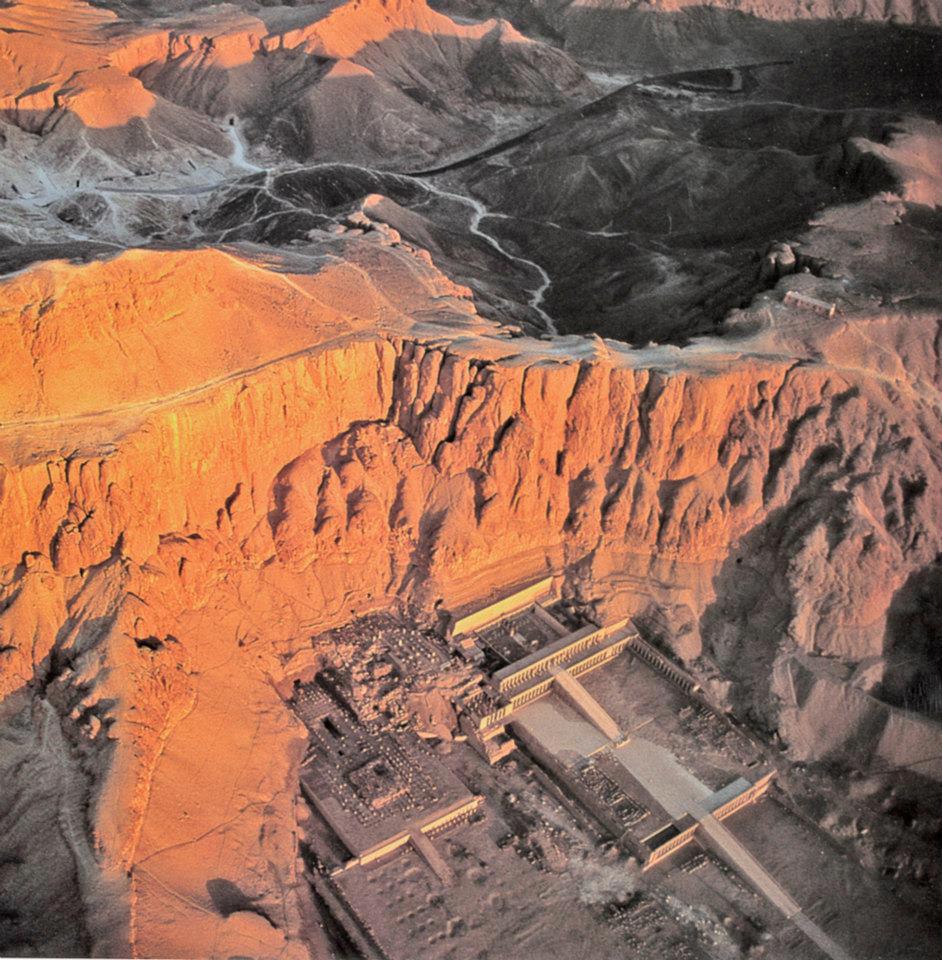
527990_4920798412461_1938065574_nThis aerial shot shows Hatshepsut’s temple nestled against the cliff-face, with the Valley of the Kings directly behind it on the other side of the mountain.  You an also see the ancient pathways across the clifftop.

Her tomb, KV20, has its entrance at the end of a branch leading from the main Valley stem.  Had it been dug in a straight line, many believe the burial chamber would have been excavated directly beneath the temple.  But sadly the quality of the bedrock was poor.  It seems the ancient tomb-builders were forced to spiral away from their original plan.

Hatshepsut’s magnificent temple features prominently in all three of my books following Meredith Pink’s Adventures in Egypt.  It’s where Merry and Adam first strike up a conversation, and she enlists his help to solve the mysterious puzzle she’s stumbled across in Howard Carter’s house.

Howard Carter’s association with Queen-Pharaoh Hatshepsut was a close one.  As a young man working for the Egypt Exploration Society, Carter spent five years as an artist recording the wall reliefs in watercolour paintings.  Later, as an archaeologist, he was responsible for excavating her tomb, KV20.  This was an unenviable task: so hot his wax candles melted and with an atmosphere thick and redolent with centuries of bat droppings.  All this provides great material for a writer, and I made good use of it in Carter’s Conundrums.

Whether or not Hatshepsut’s temple stands as one of her great triumphs or a thwarted dream, I rate it as possibly the most beautiful of all the ancient Egyptian temples.

DSCN5281

The most romantic sunsets on earth …

The Egyptian sunsets are spectacular … possibly as a result of all the sand in the atmosphere.  The heroine in my books, Merry Pink, has a fair bit to say about the mystery and magic of an Egyptian evening.  And she has just cause …

Here’s a short film I put together of views of the Nile at twilight and sunset – all taken from the wonderful Jolie Ville hotel, which features as the setting for Meredith Pink’s Adventures in Egypt.

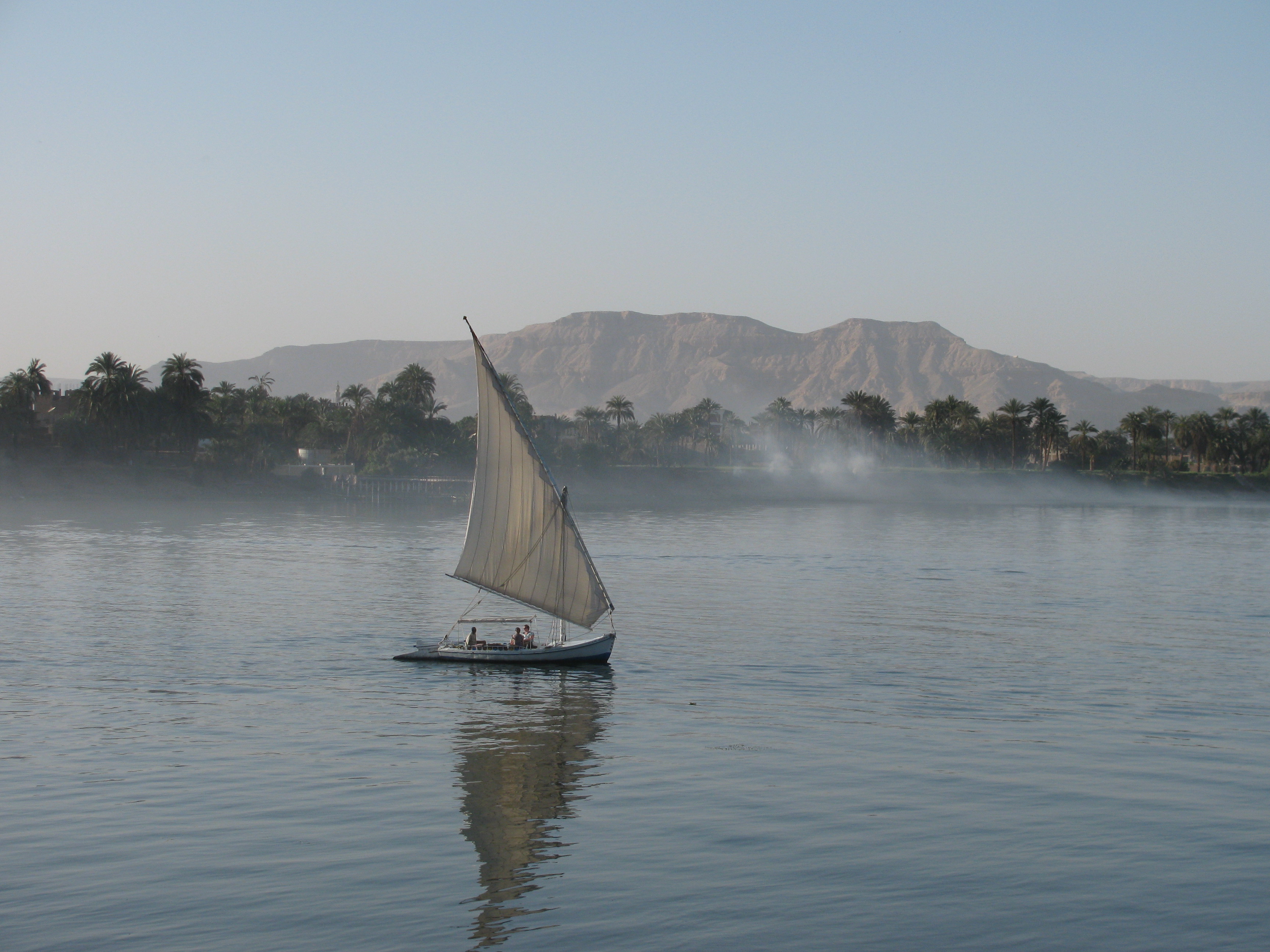
The felucca’s glide by, alongside the occasional cruise boat – and fishermen go about their business in the same way they’ve done for centuries.  There’s a timelessness about it that never fails to cast its spell.

Like Merry, I’ve spent many happy hours with a drink in hand enjoying the spectacle of the most romantic sunset on earth.  Egypt has its troubles, to be sure.  But there’s nowhere I’d rather be as dusk falls on a hot, tropical night …