The incredible length of Egypt’s civilisation

The link below will take you to an article showing 23 “mind-blowing facts that will destroy your understanding of time”.  The author requests shares, so I’m doing just that.

Two of the facts relate to ancient Egypt and help to demonstrate just what an incredibly long passage of time the Egyptian civilisation can claim.

UnknownFirst, Cleopatra lived closer in time to the building of Pizza Hut than the building of the Great Pyramid of Giza.

Cleopatra ruled as the last Pharaoh at around 30BC, before Egypt fell to the Roman Empire.  The Great Pyramid was already approximately 2,500 years old, having been built for the pharaoh Khufu in the Old Kingdom of dynastic Egypt in circa 2560 BC.

UnknownThe first Pizza Hut opened in 1958, approximately 500 years closer in time to Cleopatra than Khufu’s pyramid.

I can’t help but wonder if Cleopatra’s knowledge and understanding of the reign of her Old Kingdom predecessor was much as ours is of her: coloured by myth and legend, and the passage of thousands of years.

Broadly contemporary with Cleopatra was the first century Romano-Jewish scholar and writer Josephus. As far as we know his work contains the only reference to the earlier Egyptian historian and priest, Manetho, who wrote his fabled Aegyptiaca some 300 years before Cleopatra ascended to the throne.  It gave a history and chronology of the pharaohs.  Whether it shed any more light on the historical facts of the dynasties that pre-dated Cleopatra’s Ptolomaic ancestry than Shakespeare did on Cleopatra’s own story is a matter for debate.

tm9The other fascinating fact is that the first pyramids were built while the woolly mammoth still roamed the earth.  A small population of mammoths survived until circa 1650 BC, by which time Egypt’s empire was well established, and the pyramids were already about a thousand years old.

I’s bind-bending stuff : how the Egyptian civilisation spans what we might consider almost prehistory, right up to the Roman Empire whose influence can still be felt in Britain today.

Perhaps this explains why ancient Egypt is such a rich source of inspiration for writers of fiction such as myself.  With a history spanning something like three thousand years, with so many famous names, and with so much gold, how can we help but be fascinated by its mystery and romance?  And with the inevitable gaps in our historical knowledge after such an immense passage of time, how tempting it is to try to fill in the blanks.

That’s what my fictional series following Meredith Pink’s Adventures in Egypt aims to do.  In each story, I take an ancient mystery and weave a story around it, letting my imagination put the flesh on the bones of what we know from archaeology and historical research.

Here is the source article, which got me thinking about Egypt’s incredibly long history : http://higherperspective.com/2015/02/understanding-time.html?utm_source=cleo&ts_pid=2

Fiona Deal – author of Meredith Pink’s Adventures in Egypt, available in paperback or to download from Amazon and all major ebook retailers.

BookCoverPreview.doBookCoverPreview.doHatshepsut's_Hideawa_Cover_for_KindleBookCoverPreview.doBookCoverPreview.doBookCoverPreview.do

A Cook Abroad: in Egypt

Photo credit : BBC

Photo credit : BBC

At last ! A programme about Egypt to warm the heart – whet the appetite –  and hopefully encourage tourists to return.  On Monday evening BBC2 screened the first of six episodes in a new series called ‘A Cook Abroad’.

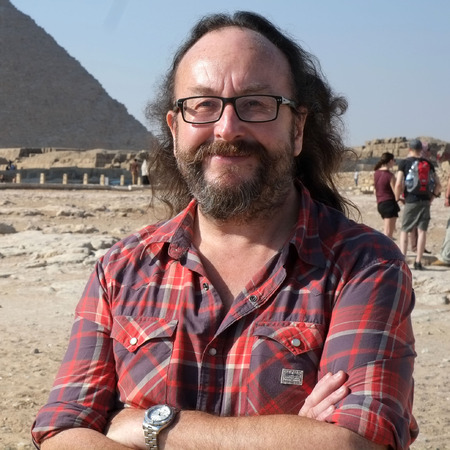
First up TV chef and one half of the Hairy Bikers travelled to Egypt to experience the nation’s culinary offerings, and explore a bit of its history.

Travelling from Cairo to Luxor via Fayoum by motorbike, and then on to Aswan aboard the steamship Sudan (the inspiration for Agatha Christie’s Death on the Nile), Myers took time to visit many of the country’s historical sites along the way.

After sampling street food for breakfast in Cairo – a bean dish called ‘ful medames’ – Myers headed out to the pyramids at Giza to fulfil his boyhood dream of standing in their shadow.

But it was his trip to the ancient necropolis of Saqqara that really got him excited.  There, he enthused over the tomb wall paintings dating back more than 4,500 years depicting the baking of bread.  As Myers pointed out, this must surely count as the earliest recipe on record!

In the oasis of El Fayoum Myers enjoyed dates pulled freshly from the palm tree, then attempted (with little success but much hilarity) to emulate the skill of the fellahin’s wife in tossing her homemade bread atop an oven-dish that looked like a pizza pan, the idea being to make flat bread of pancake-like proportions.

In Luxor, Myers sampled a delicious-looking stuffed pigeon in a local restaurant before dressing up to board the steamship Sudan, where the chef taught him to make a local delicacy called um ali (a sweetened bread and butter pudding with hot milk).  But first, he visited the West Bank where he sampled shasmi bread with a local called Mahmoud.  He noted how the design Mahmoud’s wife baked into her bread was the same as on the loaves depicted in the ancient wall paintings in Deir el Medina, the Village of the Workers.  Great to see that some things haven’t been lost down the centuries.

To mark the end of his journey, Myers was invited by a family of Nubians for a feast to celebrate the end of Eid Al Adha, and help prepare a traditional meal to be shared with family, friends and neighbours.

For Myers, the star of the show was the home-baked Egyptian bread, in all its various forms.  For me, it was seeing the warm welcome he was given by all the Egyptian people he encountered.

All in all, it was a programme that left me longing to return.  I was even nostalgic for the haggling game, watching Myers enter some good-natured bartering with trinket sellers near the Colossi of Memnon.  I can only hope others watching the programme had their appetites similarly whetted.  Well done Dave Myers on showing us the delightful side of Egypt and its people.

Since Egyptian food in singularly absent from what’s on offer in the UK – as Myers pointed out,  “Where can you go for an ‘Egyptian’?” – the best bet is surely to visit the Land of the Pharaohs and sample it with the locals.

Fiona Deal – author of Meredith Pink’s Adventures in Egypt – available in paperback on Amazon or to download from Amazon or all major ebook sellers.

BookCoverPreview.doBookCoverPreview.doHatshepsut's_Hideawa_Cover_for_KindleBookCoverPreview.doBookCoverPreview.doBookCoverPreview.do

Tutankhamun’s Death Mask damaged

ekwva5v7srjibrfg1skwIt just goes to show … fact can sometimes be stranger than fiction !  Yesterday, 22 January 2015, the story hit the world’s headlines that the famous death mask of Tutankhamun, on display at the Egyptian Antiquities Museum in Cairo, was allegedly damaged last year.  The blue plaited beard was apparently knocked off.  A botched repair job appears to have been undertaken to glue it back on with epoxy, leaving a discernible line of glue.  To make matters worse, it’s reported that attempts to scratch off the visible glue inflicted more damage.  There are conflicting reports about whether the damage was purely accidental, or whether the – detachable – beard was knocked off during cleaning.

A committee has now been set up to investigate exactly what happened.

Whatever the truth or real circumstances of what happened, this story raises all sorts of questions about the protection, care and preservation of Egypt’s ancient artefacts in the years since the revolution that removed Hosni Mubarak in February 2011.

My series of novels following Meredith Pink’s Adventures in Egypt has many scenes set at the Egyptian Museum in Cairo.  A couple of my key fictional characters work there.  I suspect had I included something like accidental damage to Tutankhamun’s death mask as part of one of my stories, I’d have been told it was too far-fetched and could never happen.  These reports just go to show that truth really can be stranger than fiction !

We can only hope the investigation will get to the bottom of what really happened, and lessons will be learnt.

Fiona Deal

Author of Meredith Pink’s Adventures in Egypt – available on Amazon.

BookCoverPreview.doBookCoverPreview.doHatshepsut's_Hideawa_Cover_for_KindleBookCoverPreview.doBookCoverPreview.doBookCoverPreview.do

Causeway of the Great Pyramid Found

underground-gateway-giza

Photo Credit : Ahram.org

Reading ‘Ancient Origins’ online, I see a report that after years of searching, the causeway for the Great Pyramid of Egypt has been found.

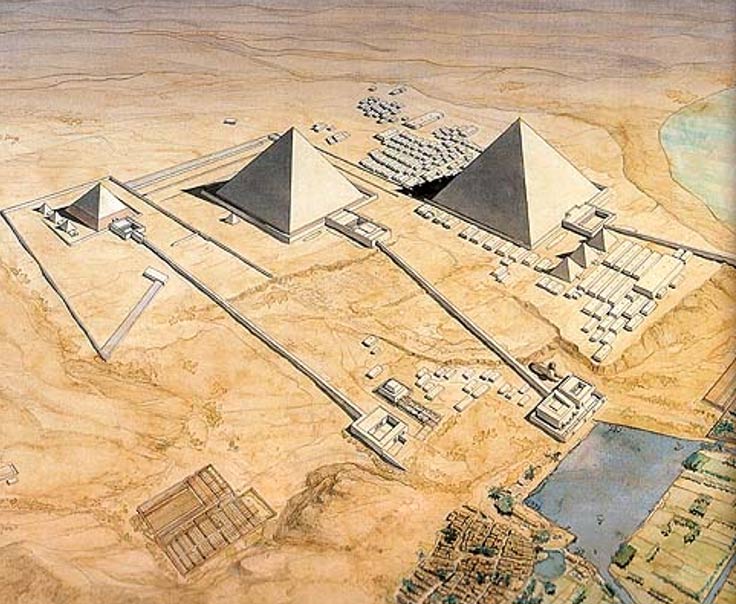
As is often the case, the facts read like something from a novel: a local resident living near the Giza Plateau was illegally digging beneath his home when he discovered a tunnel leading to the Pyramid of Khufu, the largest of the three pyramids in Giza.

Apparently a resident in the village of El Haraneya in Giza, a prohibited area for drilling, began digging beneath his house to a depth of about 10 meters.  He discovered a passage consisting of huge stone blocks.

reconstruction-of-the-pyramids-of-Giza-causeways

Artists impression showing pyramid causeways. Credit: Saint Anselm College

The Minister of Police for Tourism and Antiquities was alerted to the discovery (it’s not clear whether this was by the resident himself). Whatever, security forces immediately placed a cordon around his property.  An archaeologist was placed in charge of a committee to investigate. The committee’s report confirms the finding of the corridor leading to the Great Pyramid, the oldest and largest of the three pyramids in Giza.  It’s thought these causeways were covered corridors or passages linking each pyramid to its temple complex or maybe with the Nile.

How exciting!  I love it when new discoveries are made in Egypt.  As a writer of fiction, it’s a never-ending source of inspiration.

What became of the resident beneath whose home the causeway was found is not clear.  Perhaps I can somehow weave him into a story !

Fiona Deal

Author of Meredith Pink’s Adventures in Egypt

BookCoverPreview.doBookCoverPreview.doHatshepsut's_Hideawa_Cover_for_KindleBookCoverPreview.doBookCoverPreview.doBookCoverPreview.do


Is it always hot in Egypt…?

Sitting at home in the UK in January (blue sky but only 4 degrees C outside) it’s easy to dream about Egypt as somewhere always hot.  Not so.  Sunny, yes.  But not necessarily warm.  My friends in Luxor are complaining about the cold on their Facebook posts at the moment.

On a Nile cruise in January 2012 it was so chilly I was forced to use the hairdryer as a fan heater – hooking it over the bathroom door so it would warm up the cabin.

IMG_4215

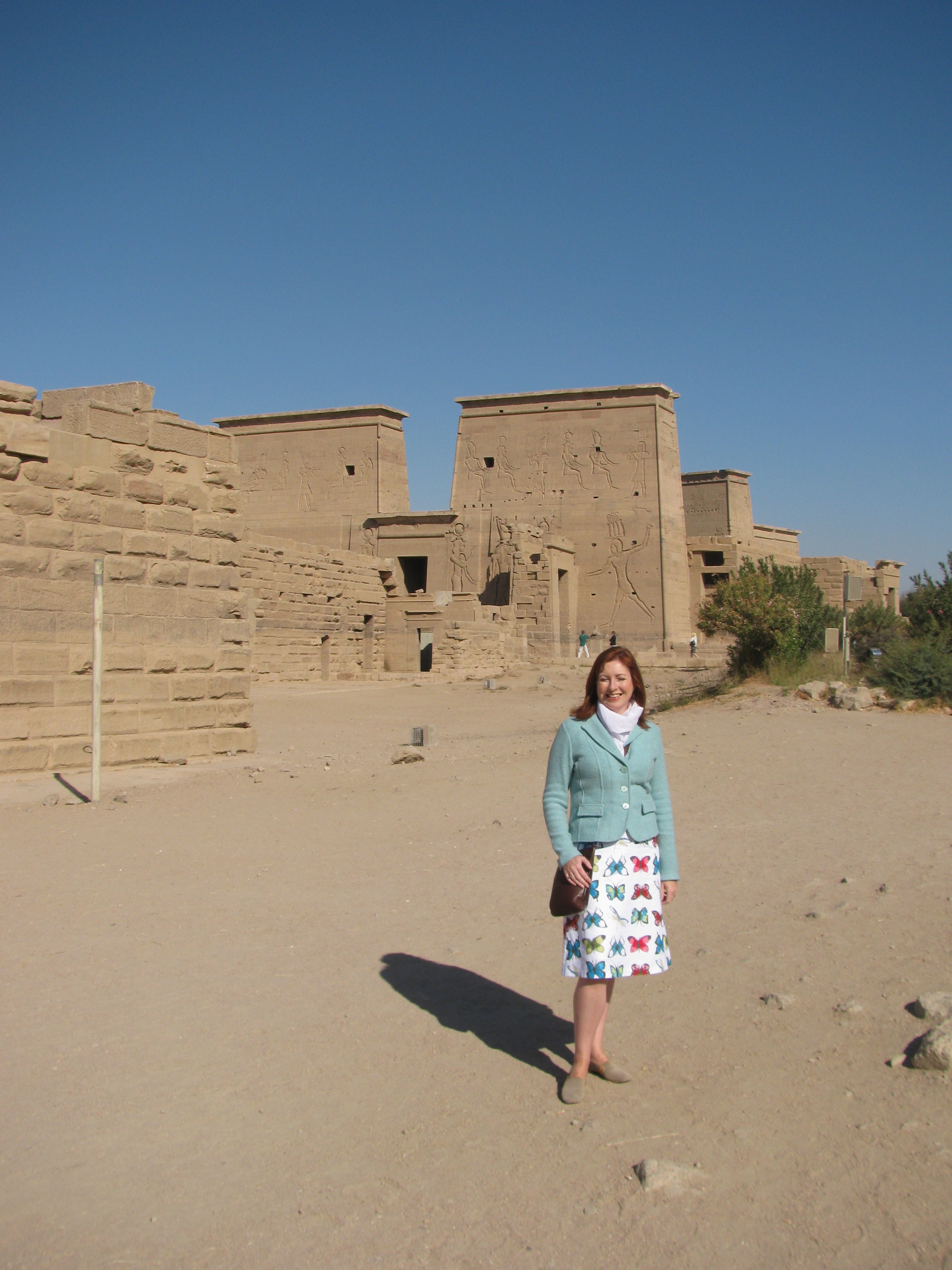
Philae Temple – January 2012


Here I am dressed in my woollens to stave off the chill …


11412_10205566437790957_6364322635031442585_n

Photo: Ahmed Sayed Ahmed


This was the Sinai Peninsular near St Catherines a couple of days ago…


10373641_578823118920559_4959212883660329620_n

Photo : Jaime Clark-Soles


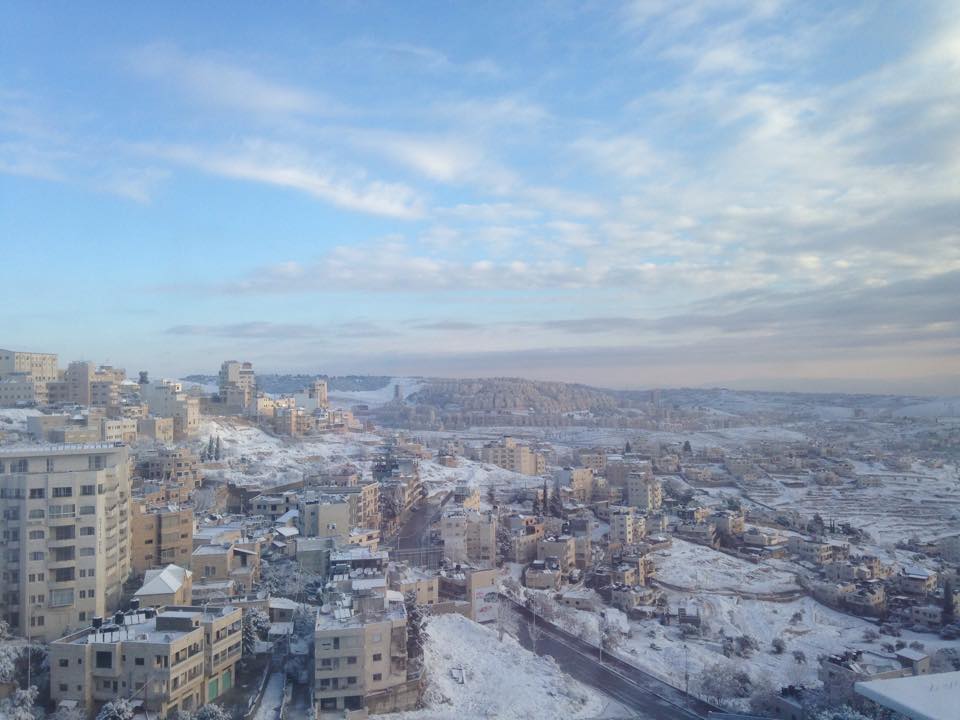
And this picture was taken last week in Israel …


So, sitting in the UK in midwinter dreaming of warmer climes is all very well.  But warmth is not guaranteed, even in Egypt !  So, maybe just for January, I’ll stick to going there in my imagination.

Fiona Deal

Author of Meredith Pink’s Adventures in Egypt

BookCoverPreview.doBookCoverPreview.doHatshepsut's_Hideawa_Cover_for_KindleBookCoverPreview-2.doBookCoverPreview.doBookCoverPreview.do


A frequent visitor to Egypt

BookCoverPreview.do

I’ve been asked recently if I live in Egypt as that’s where my fictional series following Meredith Pink’s Adventures is set.  I don’t.  But I’ve been a frequent visitor over the years.

I feel a strong sense of belonging, which is perhaps the next best thing to calling somewhere ‘home’.

IMG_4744My most recent trip was in July 2014, staying at the lovely Jolie Ville hotel, on its own island just outside Luxor.  This was my third trip to the Jolie Ville, which features as a location in the first three books in the series: Carter’s Conundrums, Tutankhamun’s Triumph and Hatshepsut’s Hideaway.  I also stayed there in 2011 (a few weeks after the Revolution) and 2009.  Tourism has been hit hard by the political upheaval of recent years.  In July 2014, I was one of only 24 guests at the hotel, which caters for something like 1,600.  Great for private use of the pool, but not for the staff who work so diligently to give guests a memorable stay. It’s tragic to see it like this, and I urge visitors to return.  I’ve always felt completely safe.

It’s fair to say in the last decade, I’ve been to Egypt almost every year; sometimes cruising the Nile, sometimes touring, and sometimes staying in either Luxor or Cairo.  To my way of looking at it, Egypt has everything: guaranteed sunshine and warmth, friendly people, great food and fascinating places to visit.  If you’re interested in ancient history or archaeology, so much the better.  Egypt is a place to capture the imagination and the heart.  I was hooked from my very first trip back in the mid-eighties when my parents took my brother and me for a half-term break one October.  We split our time between Cairo and Luxor and I remember I came home with my head spinning.

Now I write adventure/mystery stories based in Egypt.  So even when I’m unable to be there for real, I can travel there inside my head.  I hope the books enable my readers to experience the land I love so much too.

Fiona

Author of Meredith Pink’s Adventures in Egypt – ancient mysteries wrapped up in modern adventures.

BookCoverPreview.doBookCoverPreview.doHatshepsut's_Hideawa_Cover_for_KindleBookCoverPreview.doBookCoverPreview.doBookCoverPreview.do


What lies beneath …?

Photo by Paolo Bondielli Min Project – Luxor Times

Published in the Luxor Times on 1 January, the first discovery in Egypt of 2015.  Found in Qurna, on the Nile close to Luxor, this is an Osirieon, a kind of God’s tomb, dedicated to Osiris.  It just goes to show how much still lies buried beneath the sands of Egypt, awaiting discovery.

As a fiction writer of an adventure/mystery series set in present-day Egypt, these continued discoveries are beyond thrilling.  My characters have been lucky enough to make a few discoveries of their own.  Some might say their ‘finds’ are far-fetched, and they’d probably be right.  My characters are not archaeologists or excavators.  Meredith (Merry) Pink starts her adventures in Egypt as a simple holidaymaker.  She counts herself fortunate when she meets a would-be Egyptologist who then introduces her to a professor who is the real thing, and can help her out with what she’s found.

BookCoverPreview.do

Carter’s Conundrums is Merry’s first adventure.  It’s the story of an accidental discovery that sheds new light on Howard Carter’s discovery of Tutankhamun’s tomb.  And it poses a few questions about what else he might have found that the world wasn’t told about at the time…      Writing it, I gave myself the imaginary holiday of a lifetime!  I hope it does the same for my readers.

There are a further five books so far in the series.  In each one Merry plays a part in unlocking a secret from Egypt’s ancient past.  The series is a joy to write and all the time new discoveries are coming to light, I know there will be plenty more ancient Egyptian mysteries for Merry to explore.

All six books in the series following Meredith Pink’s Adventures in Egypt are available to download or in paperback on Amazon.

Fiona Deal

BookCoverPreview.doBookCoverPreview.doHatshepsut's_Hideawa_Cover_for_Kindle BookCoverPreview.doBookCoverPreview.doBookCoverPreview.do


Tutankhamun: The Truth Uncovered

Last night I watched the hour long BBC1 documentary called ‘Tutankhamun : The Truth Uncovered’.

It set out to present clues as to why the most famous Egyptian Pharaoh of them all died so young.  The theory of murder due to a blow to the head was debunked.  Actually, it was debunked years ago … the bone fragments shown by X-ray to be floating in the back of the boy king’s skull were proved to have been displaced post mortem and also after the embalming process.

The programme showed us a ‘virtual autopsy’ using more that 2,000 CT scans of Tutankhamun’s mummified body.  This remarkable technology has enabled scientists to reveal the first ever full-sized, scientifically accurate computer generated image of the young king.  Sadly, it is a far cry from the hauntingly beautiful and perfect image we are more used to from the glorious death mask and much of the other artwork and statuary surviving of Tut from antiquity.

It reveals the club foot, which explains once and for all why so many walking canes – over 120 of them – were found by Howard Carter when he entered Tutankhamun’s tomb. I can’t help but wonder if seeing ‘the truth uncovered’ might actually be a little less than Tutankhamun deserves.  We come face to face with a teenager who might now unkindly, but no doubt accurately, be referred to as a cripple.  I’m sure he’d have preferred the images of himself riding his chariot, full of youthful vigour to be the ones to survive him down the centuries.

And with mention of the chariot (there were six of them found dis-assembled in Tutankhamun’s tomb) we come to the next popular theory explaining his early death. The CT scan reveals the fracture above his knee, which experts believe to have killed him.  A long-held theory is that the fracture was caused by a fall from his chariot whilst out hunting, or perhaps even in battle. (Or maybe he was pushed?).  But last night’s documentary suggests it would have been almost impossible for the young king to ride at any speed in a one-man chariot.  Or indeed ride a chariot at all.  The club foot and bone wasting disease shown also to be affecting his left foot would, we are told, have made it excruciatingly painful to ride.

And so, another explanation has to be found.  It is not slow in coming.  Epilepsy.

This condition, we are told, may also account for the ‘visions’ experienced by Tutankhamun’s predecessors.  His great-grandfather, Thutmosis IV, recorded in the famous ‘dream stele’ (still situated between the paws of the Sphinx) the vision in which the Sphinx spoke to him and told him if Thutmosis cleared the sand from around the Sphinx’s body, he would be crowned king.  And, Akhenaten, the controversial pharaoh who preceded Tutankhamun was apparently given to religious visions, which led him to elevate the sun disc, the Aten, as the sole god from the Egyptian Pantheon.  They also led him to build a new city, modern Amarna, on virgin soil in middle Egypt.

And now, with the mention of Akhenaten, we come to the part where I take issue with last night’s documentary.  DNA testing has enabled scientists and Egyptologists to build Tutankhamun’s family tree.  This has established that the body found in tomb KV55 is Tut’s father, and the ‘younger lady’ found in the cache hidden inside Amenhotep II’s tomb is Tut’s mother.  More astonishing, Tutankhamun is shown to be the product of an incestuous full-brother-and-sister relationship.

This much, I believe, is irrefutable.  It seems to me tragic that in their attempts to keep the royal bloodline pure, the pharaohs of the late 18th dynasty actually inbred its genetic downfall.

BUT, the documentary makes one big and, to my way of looking at it, unsupportable assumption … That the KV55 mummy is Akhenaten.  Ergo Akhenaten is Tutankhamun’s father.  This is presented as FACT, with no questions asked.

This does the viewing public a huge disservice.  While Akhenaten is unquestionably one candidate as the KV55 mummy, he is not the only one.  Many scholars believe the skeleton to be that of Akhenaten’s younger brother, an ephemeral character on the pharaonic stage.  His name was Smenkhkare.  Nobody has ever been able to prove the identity of the KV55 mummy for sure.  So, for the BBC to overlook this and present Akhenaten as the sole candidate seems to me to be misleading and negligent.

We know Akhenaten was famously married to Nefertiti.  They very publicly had six daughters.  Images of the whole family are plastered all over Amarna.  Nobody has yet gone so far as to suggest the ‘younger lady’ is Nefertiti, or that she was Akhenaten’s full sister.  So, we must suppose that Akhenaten had an incestuous relationship with one of his full sisters, who bore Tutankhamun.  Under the royal protocol of the time, she would have had to be one of his wives, possibly even his Great Royal Wife.  For this to have completely escaped the historical record seems to me extremely unlikely.

Yet, if his younger brother Smenkhkare were to have had an incestuous marriage with one of their sisters, with Tutankhamun as the result, it seems perfectly possible for no record of it to have survived.

I personally believe Smenkhkare is the KV55 mummy.  Other scholars agree.  One other piece of evidence supports this theory.  On last night’s documentary, Tutankhamun was repeatedly described as Akhenaten’s successor.  He wasn’t. At least, not at first.  The historical record shows quite clearly that Smenkhkare came to the throne on Akhenaten’s death.  Incidentally, Smenkhkare married Akhenaten & Nefertiti’s eldest daughter, his niece Meritaten, presumably to strengthen his right to rule.  She became his Great Royal Wife.  Whether his previous sister-wife was still alive at the time is a matter for conjecture.

It is not clear how long Smenkhkare ruled.  Some experts say a few months, others up to three years.  But rule he did.

To me, this is more evidence that Tutankhamun was not Akhenaten’s son.  There are plenty of other examples of minors coming to the throne, so his age would not have presented a reason for him to be passed over in favour of his ‘uncle’ Smenkhkare if indeed Akhenaten was his father.  I think in the absence of a male heir who was his son, the throne passed to Akhenaten’s brother and only then on Smenkhare’s death to his son, Tutankhamun.

Frustratingly, none of this can be proved once and for all.  We need more discoveries to be made in the historical record, or for modern science to take yet another leap forward.

I’m left with the impression of a documentary wanting to re-work old ‘truths’ to find a new angle.  I’d have been perfectly happy with this, if only certain assumptions were not presented as fact.

Luckily for me, there is one field in which it’s more acceptable to work within what’s known, and make up the rest.  I am a fiction writer.  The mysteries of ancient Egypt are my chosen subject.  So last night’s documentary was of particular interest.  I’m pleased to say, it didn’t present anything to make me go back and rewrite any of the content of my books.  The second book in my series following Meredith Pink’s Adventures in Egypt is Tutankhamun’s Triumph.  If you’re interested in reading more about Tut’s family tree, you may wish to give it a go.

Fiona Deal

Author of Carter’s Conundrums, Tutankhamun’s Triumph, Hatshepsut’s Hideaway, Farouk’s Fancies and Akhenaten’s Alibi. Available on Amazon.com, Amazon.co.uk, and all other Amazon sites.
BookCoverPreview.do


Book 2 of Meredith Pink's adventures in Egypt

Book 2 of Meredith Pink’s adventures in Egypt
Hatshepsut's_Hideawa_Cover_for_Kindle BookCoverPreview.do

BookCoverPreview.do


Sailing the Nile on a Victorian Dahabeeyah

One of the things I enjoy about writing a fiction series is deciding how to keep my characters moving forward across several books.  For the first three books in my series following Meredith Pink’s adventures in Egypt, starting with Carter’s Conundrums, my main character was on a tourist holiday, staying at the Jolie Ville hotel, situated on its own island in the Nile in Luxor.

IMG_4738As the series developed, I needed to find a way for the central British characters to remain in Egypt.  They needed to progress from tourist visas to working visas, and find somewhere permanent to live.  And so the idea of having them own and run a restored Victorian dahabeeyah was born.  In Farouk’s Fancies they are setting up in business offering luxury Nile cruises to discerning travellers.

Unknown

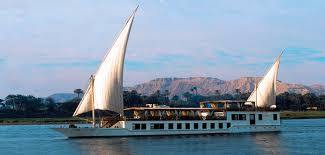
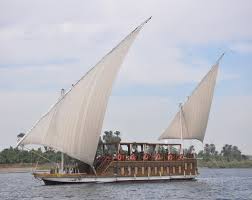
From the 1850s through into late Victorian times, the dahabeeyah was the standard way to travel up and down the Nile.  ‘Dahabeeyah’ means ‘golden boat’ in Arabic.  The prototype for the Victorian version can be found on tomb and temple walls in Egypt and has changed little in design since pharaonic times when the royals and nobles painted their boats gold.  Amenhotep III had a Nile sail barge called ‘Aten Gleams’.

images-5The dahabeeyah started to lose popularity when Thomas Cook, a pioneer in travel, who single-handedly invented modern tourism in Egypt, introduced the Nile steam boat.  The steam boats significantly reduced the journey time along the Nile.  Where the dahabeeyah took a traveller on a grand voyage of discovery, the steam boats introduced the idea of a shorter sight-seeing trip.  These were popular with late nineteenth century travellers.

As tourism became available to the masses during the twentieth century, the Nile cruise boats adapted to the increased demand, becoming the large floating hotels we are used to today.

images-6But in recent years there has been a resurgence in those seeking out a more traditional way to journey along the Nile.  There are those drawn to Egypt by the lure of nostalgia for the pioneering days of archaeology, as well as the antiquity to be found along the Nile.  A number of restored dahabeeyahs became available for hire during the early years of this century. It’s into this niche market that my characters have stepped.

Sadly the political situation in Egypt and elsewhere in the Middle East has put tourists off the Nile as a holiday destination.  So my characters must struggle to see if they can get their new business venture afloat.  Otherwise I may have to dream up another way of keeping them in Egypt so they can continue their adventures.

Fiona Deal

Author of Carter’s Conundrums, Tutankhamun’s Triumph, Hatshepsut’s Hideaway, Farouk’s Fancies and Akhenaten’s Alibi.  Available on Amazon.com, Amazon.co.uk, and all other Amazon sites.

BookCoverPreview.doBookCoverPreview.doHatshepsut's_Hideawa_Cover_for_KindleBookCoverPreview.doBookCoverPreview.do


Cruising the Nile


IMG_3094
The palm trees nod politely to each other along the riverbank.  Black and white kingfishers dart in and out of the shallows, playing a game of hide and seek among the reeds that line the waters edge.  The great river Nile surges underneath the boat, making its journey from Ethiopia to spill into the Mediterranean, thousands of miles away.  This is Egypt.

To cruise the Nile is to sail through a timeless landscape.  Ok, so the electricity pylons compete with the ancient stone-built pylons (or gateways) of the ancient temples.  We’re not so much sailing under the gigantic sails of a Victorian dahabeeyah as being propelled through the water by diesel, no doubt leaving choking fumes in our wake.

But this is still Egypt.  Exotic, timeless, romantic and just slightly scary.  The sun beats from a hard, hot sky, demanding submission in much the same way I imagine the ancient Pharaohs once did.  The locals hassle incessantly, citing the delights of caleche rides (horse and carriage) and trips out on a felucca at sunset.  Baksheesh is a way of life.  The price they suggest is never actually what they mean, or what you’ll end up paying if you’re unwary.  But the people are friendly, welcoming and eager to share the delights of their country and way of life.

I don’t think there’s anywhere quite like it on the planet.  Ancient and modern juxtaposed in a way that makes you wonder which is more deserving of its position.

This is the setting for my series of books following Meredith Pink’s adventures in Egypt.  Through her, I get to spend all my leisure time in the fabled land of the Pharaohs.  There’s nowhere I’d rather be, whether it’s for real or the opportunity to travel along the banks of the Nile in my imagination.

Here’s a short video I made showing typical river scenes from the deck of a Nile cruiser.  I hope it brings a little slice of Egypt to wherever you are right now.

Fiona

Prince Charming finds Carter’s Conundrums

Book 1 of Meredith Pink's Adventures in Egypt

Book 1 of Meredith Pink’s Adventures in Egypt

Here’s a link to an interview Jessica Elliott, living in Kansas USA, asked me to do.  She read Carter’s Conundrums and found me on Facebook.  She’s also a writer.  Her book about how to become Prince Charming, called Charming Academy, sounds like great fun.  I’ve downloaded it to read over Easter.

Here’s the interview

Egypt – a timeline – ancient to modern

Egypt’s history spans an amount of time so immense it’s head-spinning.  I remember as a sixteen year old, on my first visit to Cairo, looking up at the Great Pyramid of Giza and finding it impossible to get my brain to compute a passage of something like four-and-a-half thousand years.

Frankly, I have the same problem today.  On a Nile cruise, it’s typical to see monuments spanning at least fifteen centuries, from the ‘old timers’ like Karnak through to the relative ‘newbies’ such as Philae.

Trying to sort them into some sort of chronology is no easy task.  As an author (of the series following Meredith Pink’ Adventures in Egypt) it’s important I’m accurate about the age of the ancient monuments relative to each other.  So, primarily to keep it all straight in my own head, but also to help travellers to the land of the pharaohs, and those with an interest in Egypt but – like me – no scholarly background … I’ve had a go at producing a timeline.  Here’s the result …


The most romantic sunsets on earth …

The Egyptian sunsets are spectacular … possibly as a result of all the sand in the atmosphere.  The heroine in my books, Merry Pink, has a fair bit to say about the mystery and magic of an Egyptian evening.  And she has just cause …

Here’s a short film I put together of views of the Nile at twilight and sunset – all taken from the wonderful Jolie Ville hotel, which features as the setting for Meredith Pink’s Adventures in Egypt.

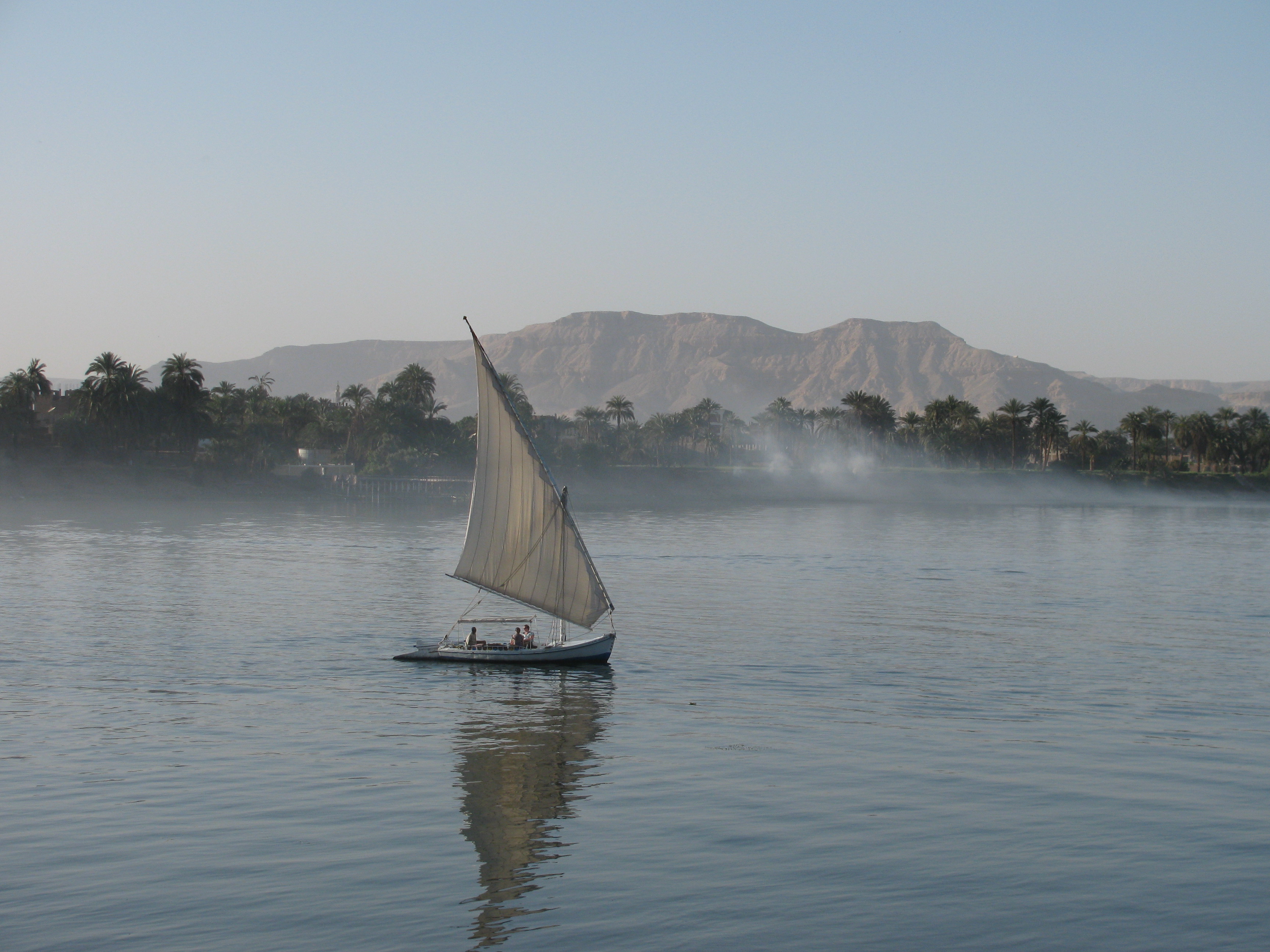
The felucca’s glide by, alongside the occasional cruise boat – and fishermen go about their business in the same way they’ve done for centuries.  There’s a timelessness about it that never fails to cast its spell.

Like Merry, I’ve spent many happy hours with a drink in hand enjoying the spectacle of the most romantic sunset on earth.  Egypt has its troubles, to be sure.  But there’s nowhere I’d rather be as dusk falls on a hot, tropical night …